
LinkedIn Stream · Module 01 · Visual 01 · Institutional Vision
When Staying Is Mistaken For Wellness
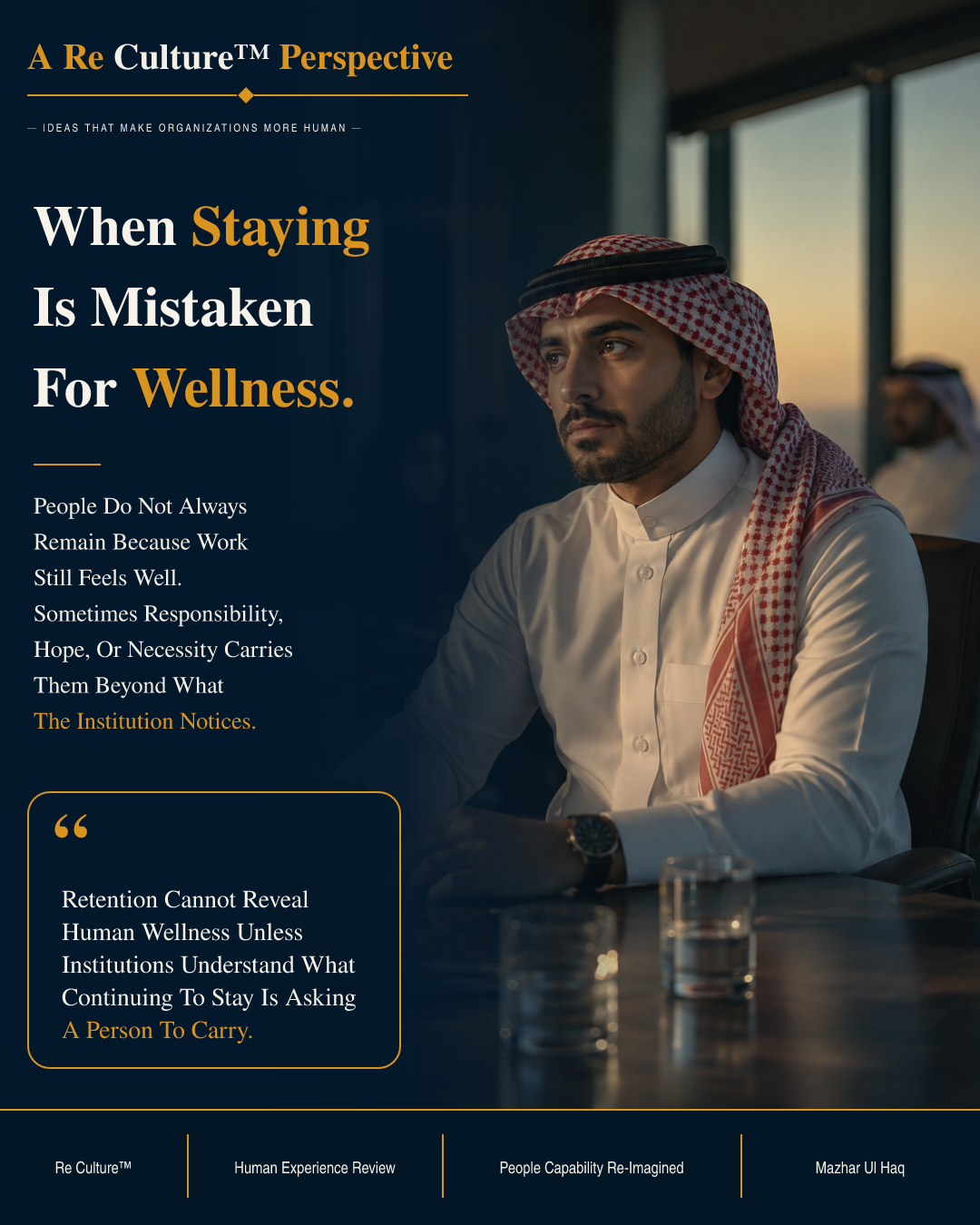
Retention Cannot Reveal Human Wellness Unless Institutions Understand What Continuing To Stay Is Asking A Person To Carry.
This Magazine Brings Two Published Streams Into One Editorial Architecture: Concise X Perspective Cards And Extended LinkedIn Institutional Visions, Arranged Through A Fixed Eight-Module Sequence.
The Perspective Cards And Institutional Visions Remain Independent Publications With Their Own Links And Records. The Magazine Sits Above Them As An Integrated Reading, Connecting Concise Thought With Institutional Interpretation Without Erasing Either Identity Or Repeating Either Text.
The First Module Connects The Early Signal Carried By Resignation With The Human Reality That May Remain Hidden Throughout Continued Employment.
Retention Cannot Reveal Human Wellness Unless Institutions Understand What Continuing To Stay Is Asking A Person To Carry.
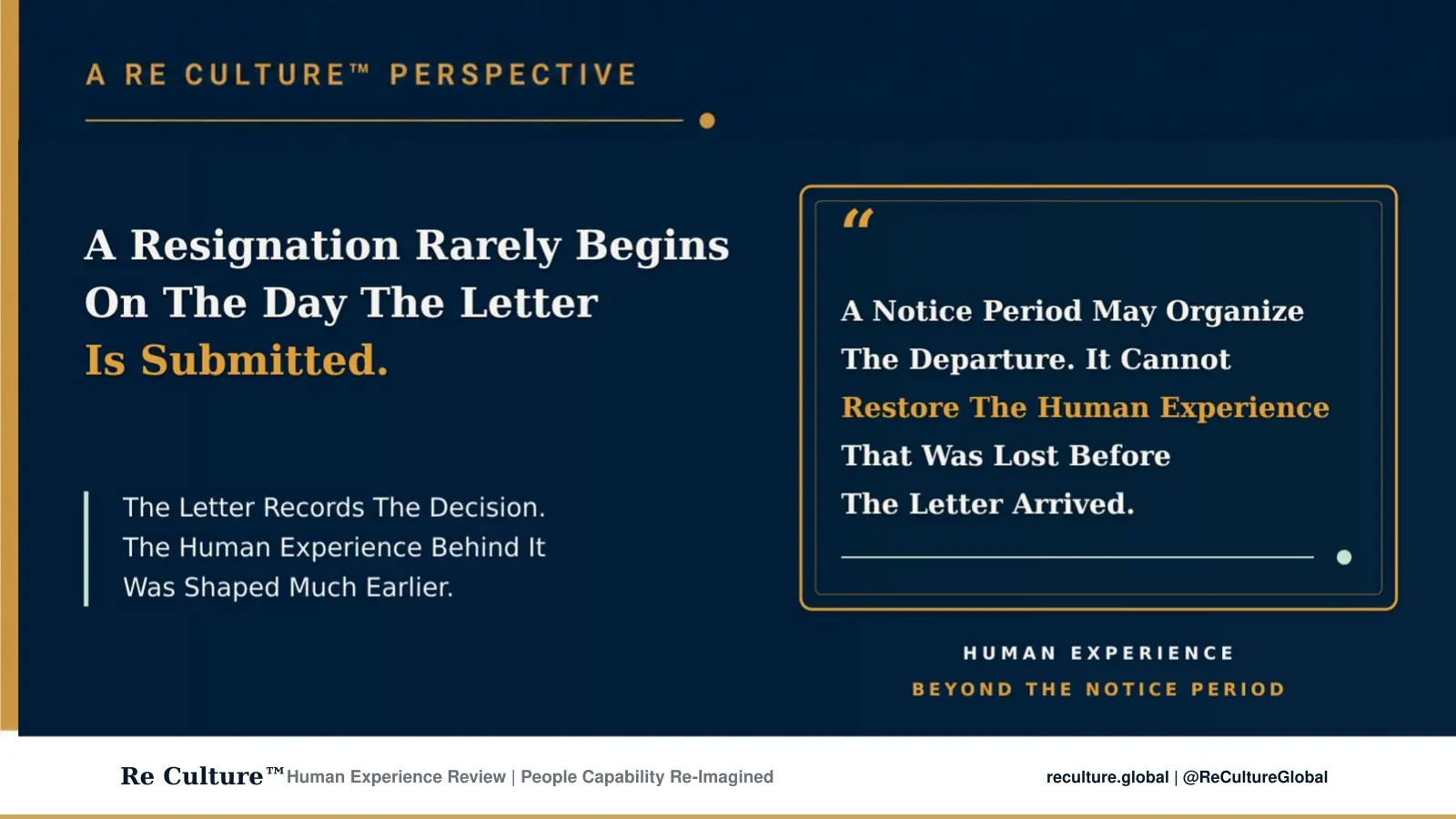
The Letter Records The Decision. The Human Experience That Led To It Was Formed Much Earlier.
An Institution May Read Continued Employment As Stability, Then Read Resignation As A Sudden Event. Together, These Publications Reveal One Human Continuum: A Person May Continue To Attend And Deliver While Trust, Voice, Recovery, And Meaning Gradually Narrow; The Letter Then Makes Visible What Was Forming In Silence. A Human Institution Does Not Wait For The Final Procedure Before It Begins To Understand. It Examines Work Design, Leadership, Load, Boundaries, And Recovery Before Human Reality Becomes A Decision To Leave.
The Second Module Connects Performance That Remains Visible With Human Truth That May Not Be Heard Seriously Until The Exit Interview.
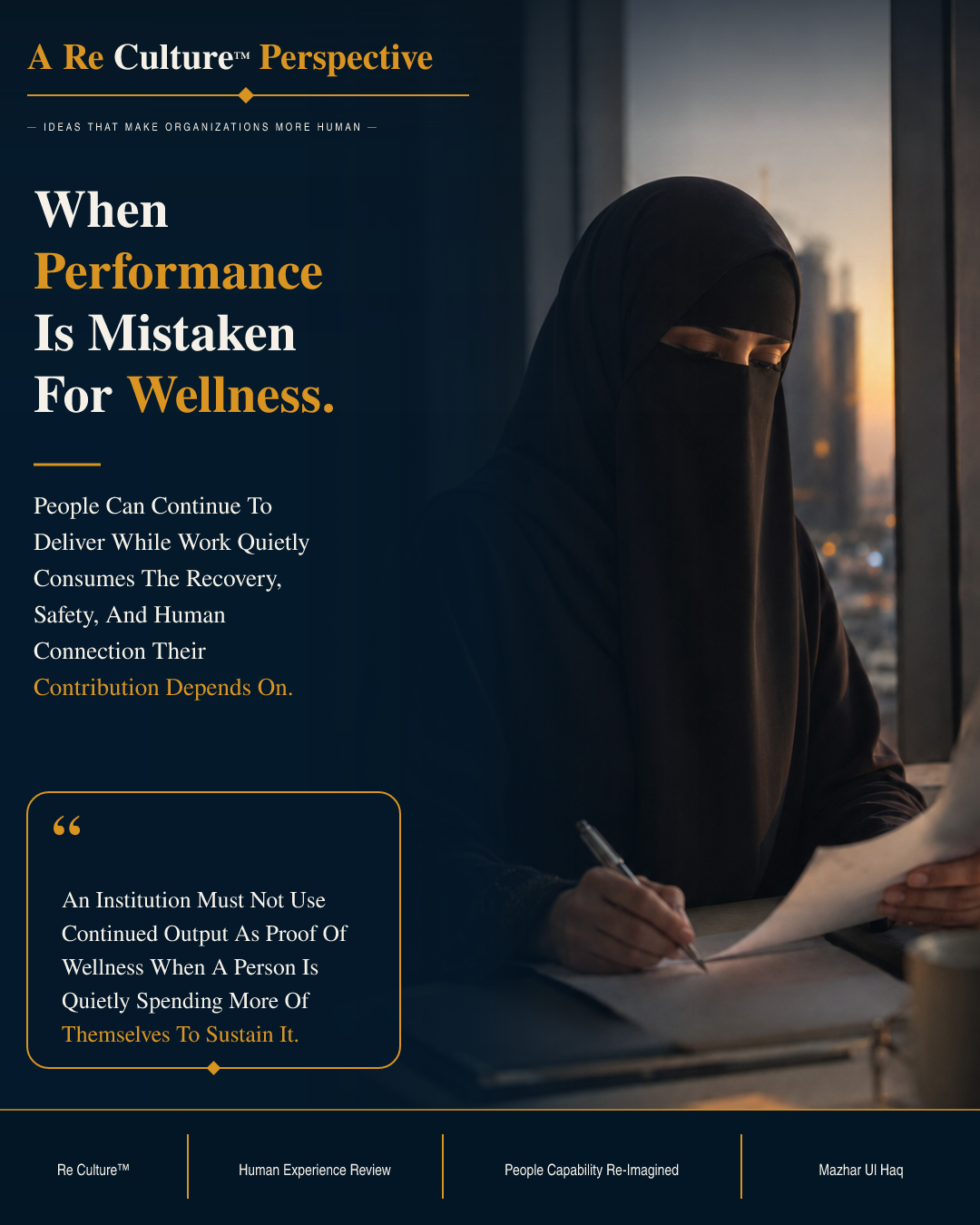
An Institution Must Not Use Continued Output As Proof Of Wellness When A Person Is Quietly Spending More Of Themselves To Sustain It.
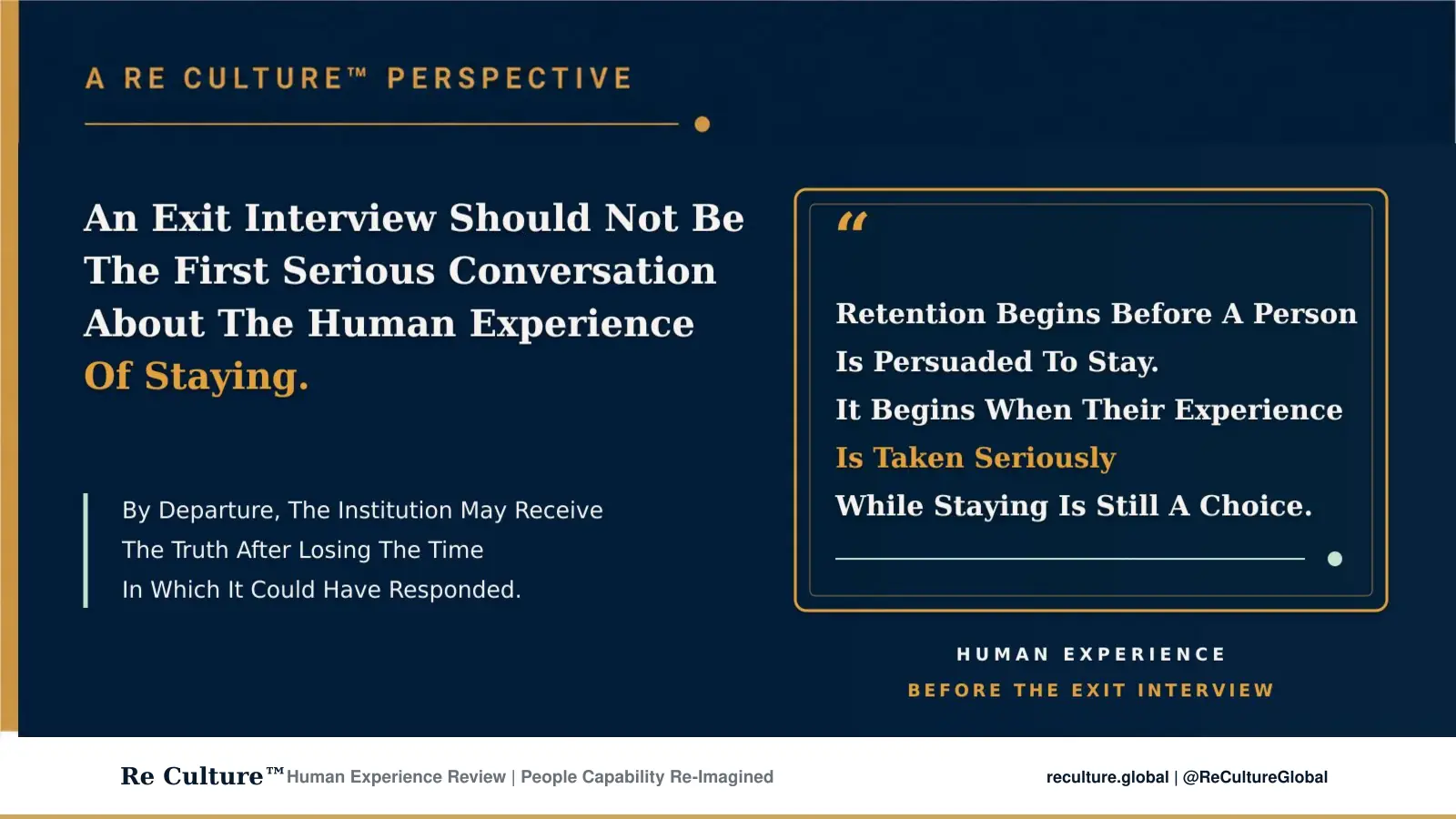
By Departure, The Institution May Receive The Truth After Losing The Time In Which It Could Have Responded.
Continued Output Does Not Prove That Work Remains Humanly Sustainable. A Person May Preserve Quality And Responsibility While Spending More Of Their Energy, Voice, And Capacity For Recovery. If The Exit Interview Holds The First Serious Question, The Institution Learns After Learning Has Become Late For Repair. Human Leadership Reads What Performance Is Requiring From The Person Before Silence Or Depletion Becomes A Final Decision.
The Third Module Connects Endurance Misread As Resilience With Recognition That Arrives Only After Departure Has Been Named.
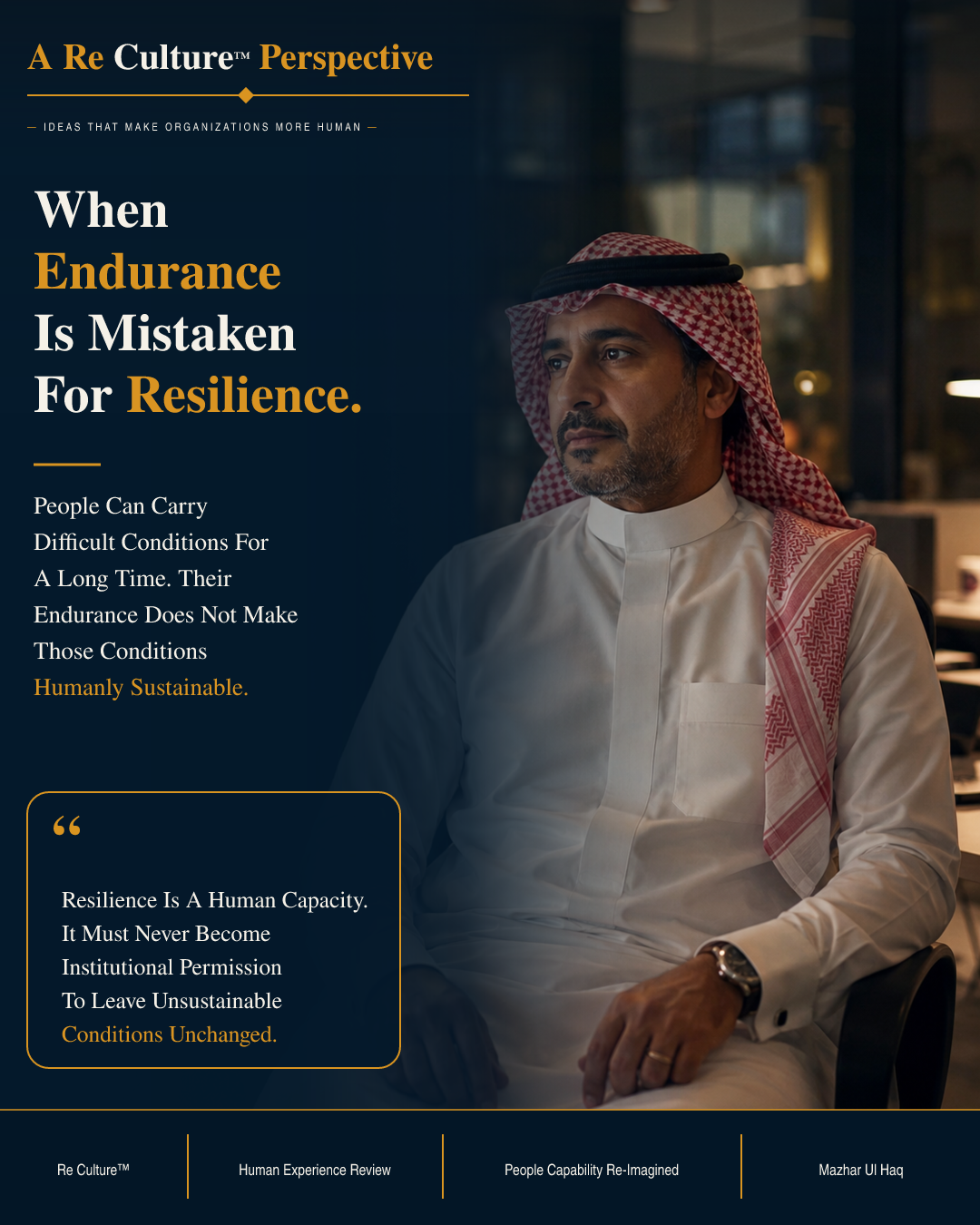
Resilience Is A Human Capacity. It Must Never Become Institutional Permission To Leave Unsustainable Conditions Unchanged.
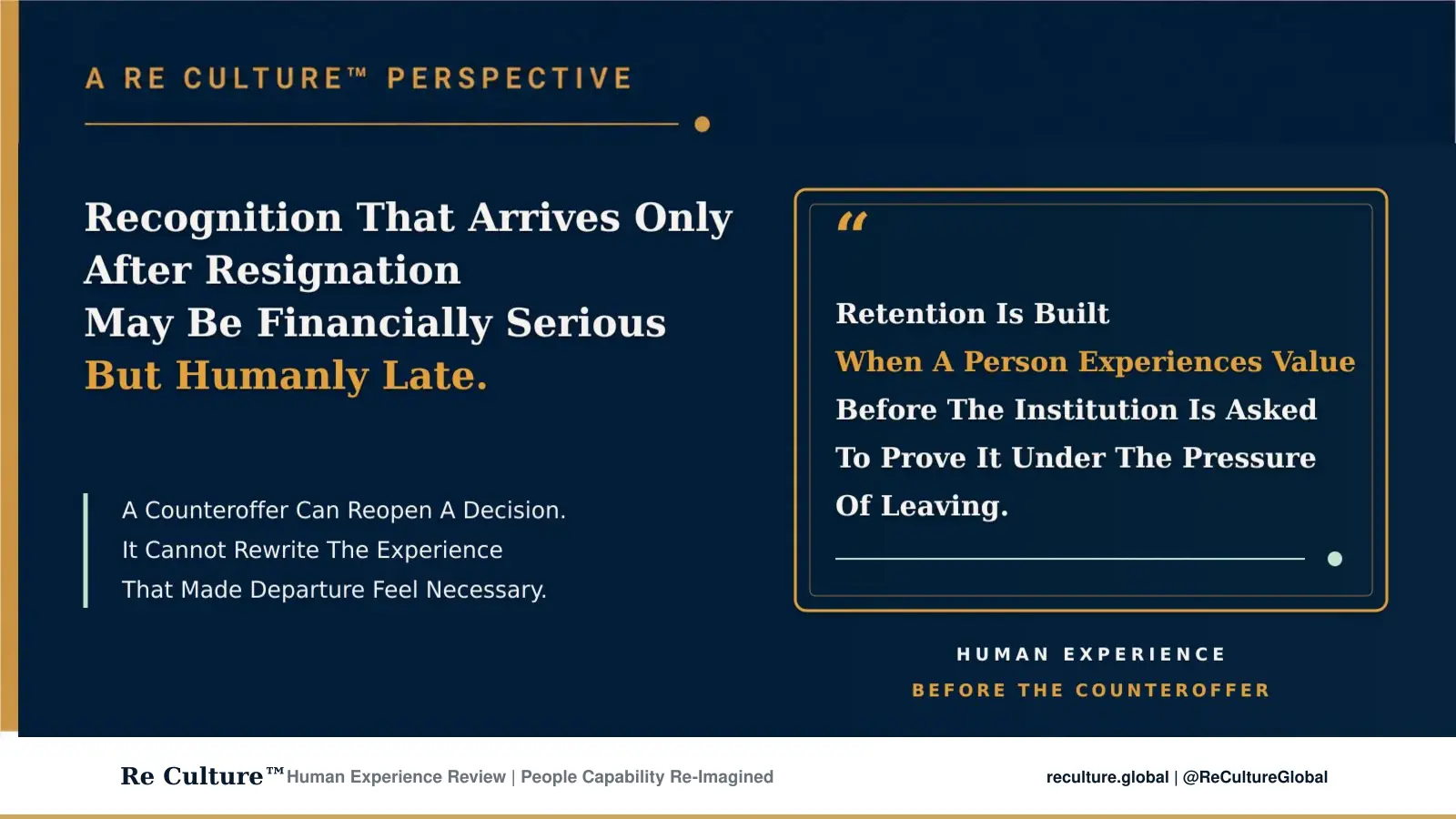
A Counteroffer Can Reopen A Decision. It Cannot Rewrite The Experience That Made Departure Feel Necessary.
When An Institution Treats A Person’s Ability To Endure As Evidence That Conditions Are Acceptable, Human Strength Becomes A Reason To Delay Change. When Recognition Appears Only After Resignation, Value May Be Acknowledged After Experience Has Already Taught The Person That It Was Unseen. A Human Institution Does Not Wait For Departure To Notice, And It Does Not Use Resilience To Justify Pressure That Could Have Been Designed More Responsibly.
The Fourth Module Connects Silence Misread As Stability With Staying After A Counteroffer That Has Not Yet Repaired Trust.
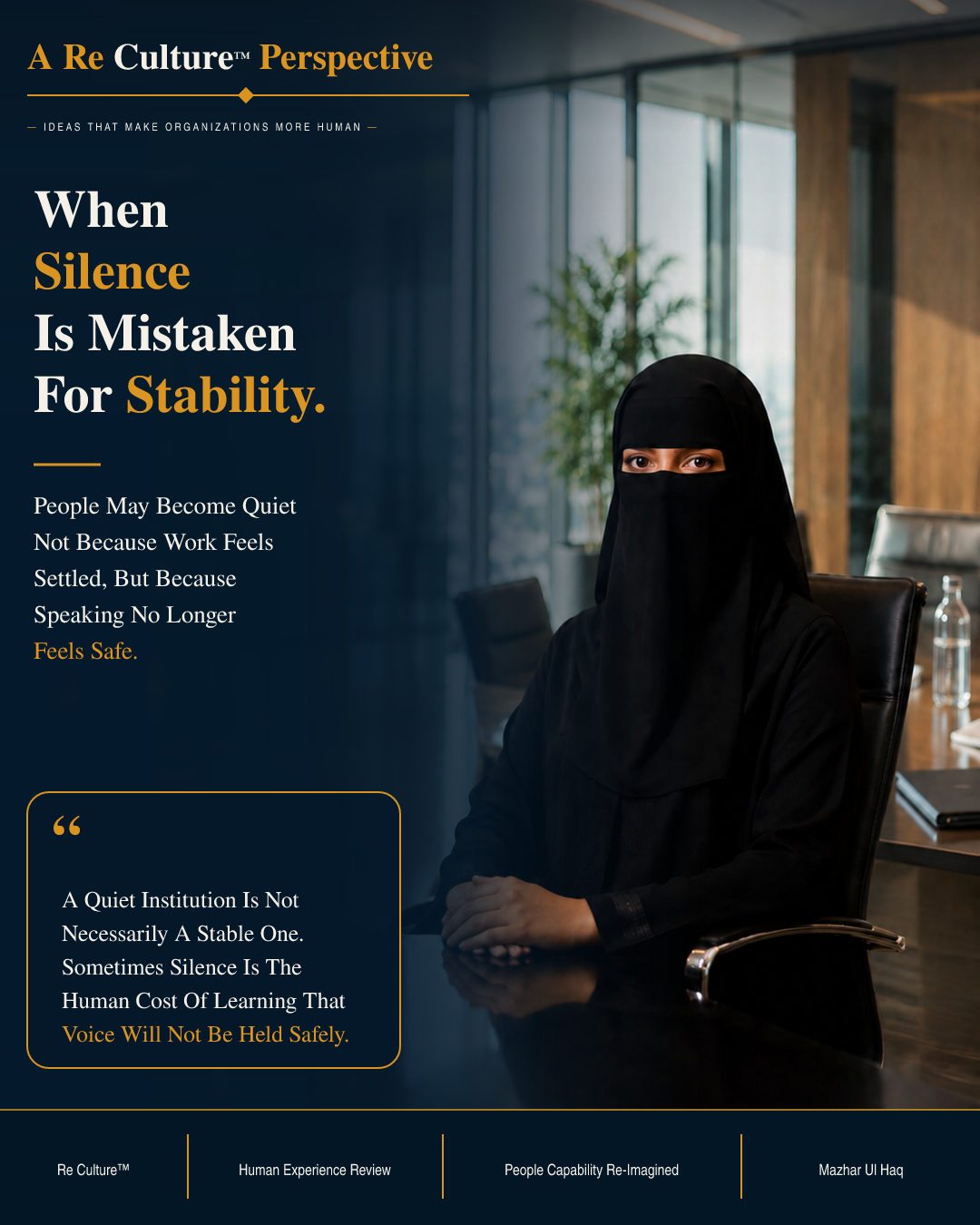
A Quiet Institution Is Not Necessarily A Stable One. Sometimes Silence Is The Human Cost Of Learning That Voice Will Not Be Held Safely.
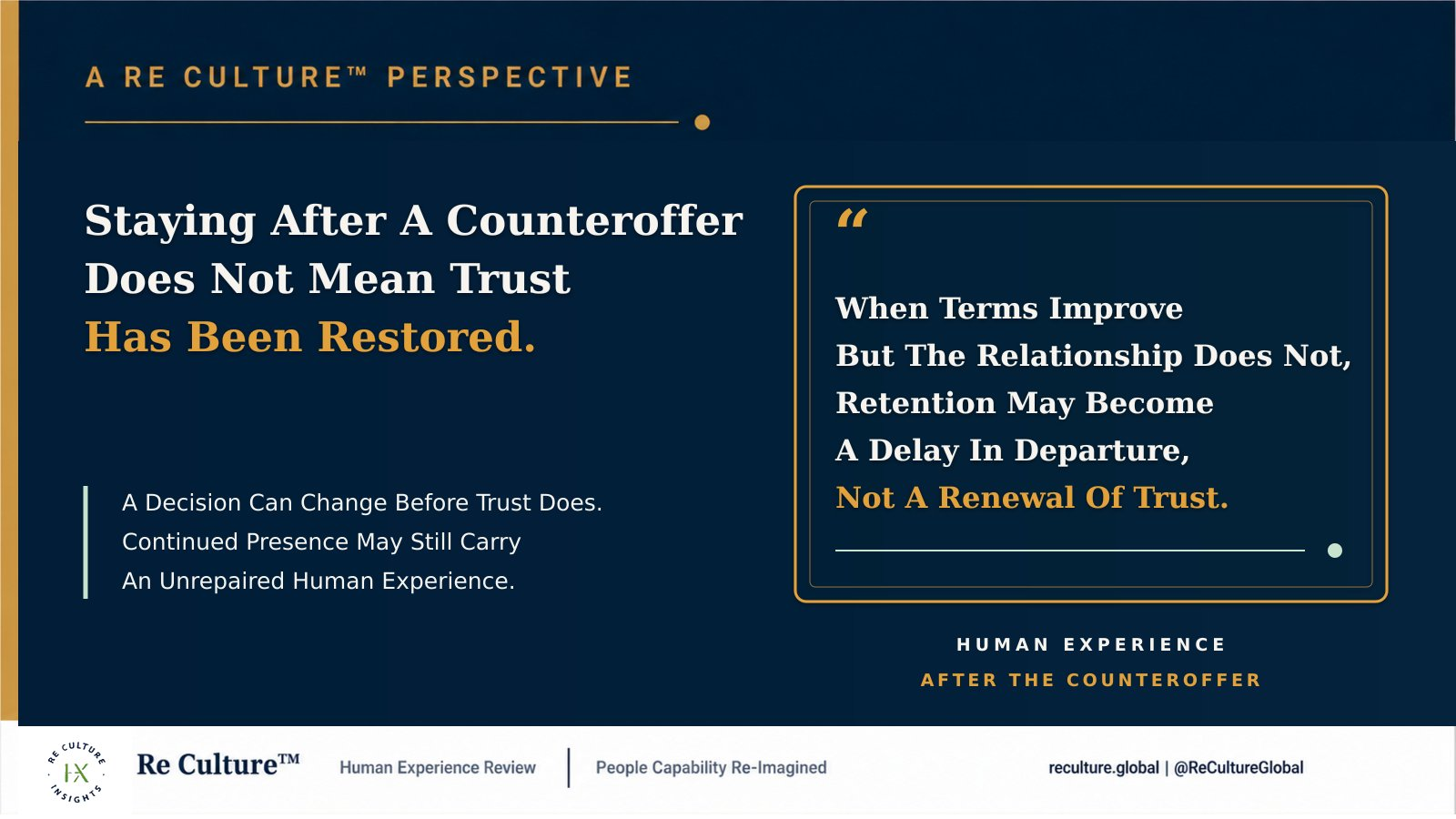
A Decision Can Change Before Trust Does. Continued Presence May Still Carry An Unrepaired Human Experience.
Silence May Resemble Stability, And Acceptance Of A Counteroffer May Resemble Relational Repair. Yet Silence Can Hold An Experience That Learned Speaking Was Unsafe, While A Counteroffer Can Change Terms Without Changing The Professional Memory That Weakened Trust. Sustainable Retention Requires More Than Revised Compensation. Voice, Fairness, Recognition, And Relationship Must Be Repaired Through Repeated Credible Experience.
The Fifth Module Connects Presence That Can Continue After Relationship Recedes With Availability Misread As Commitment.
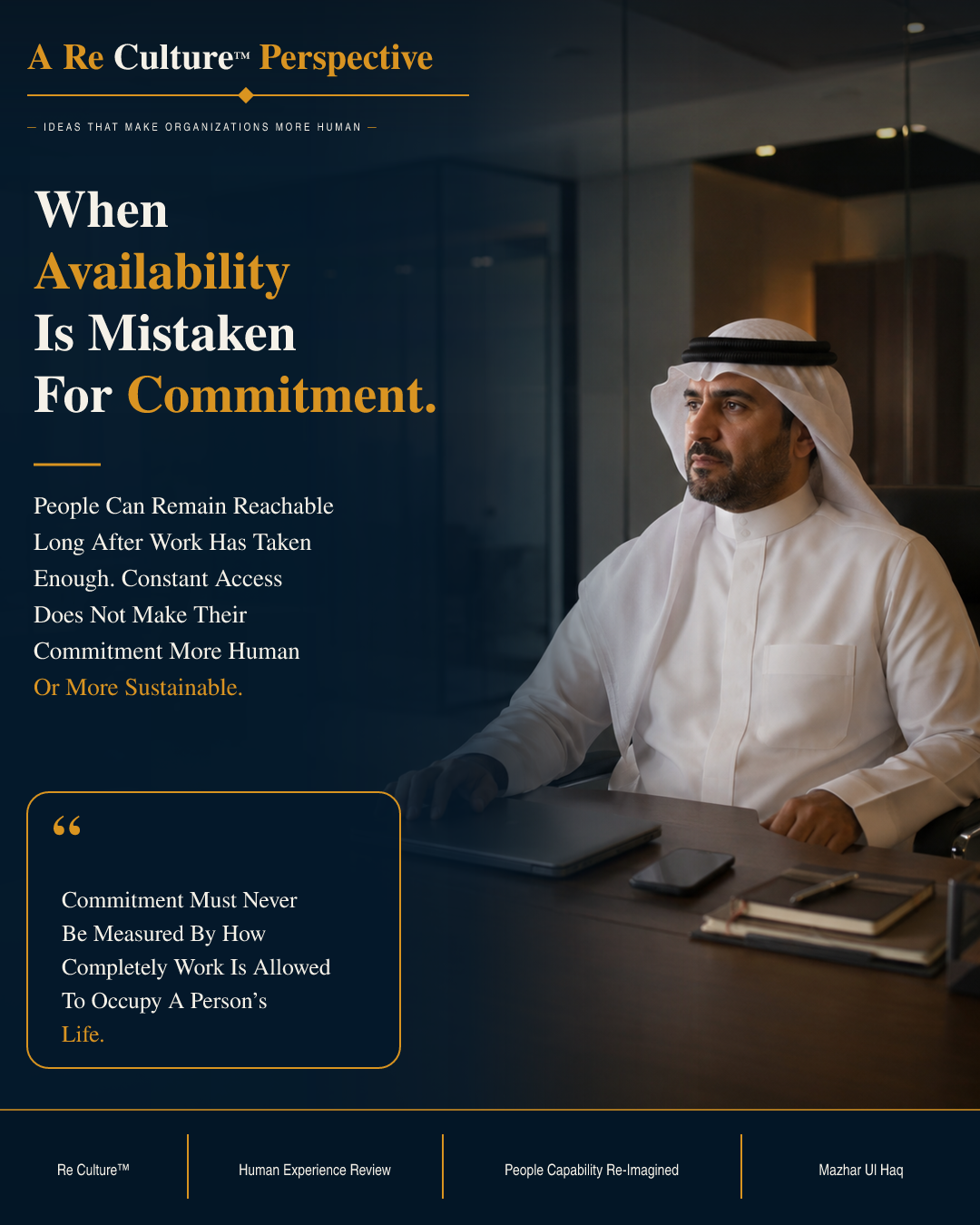
People Can Remain Reachable Long After Work Has Taken Enough. Constant Access Does Not Make Their Commitment More Human Or More Sustainable.
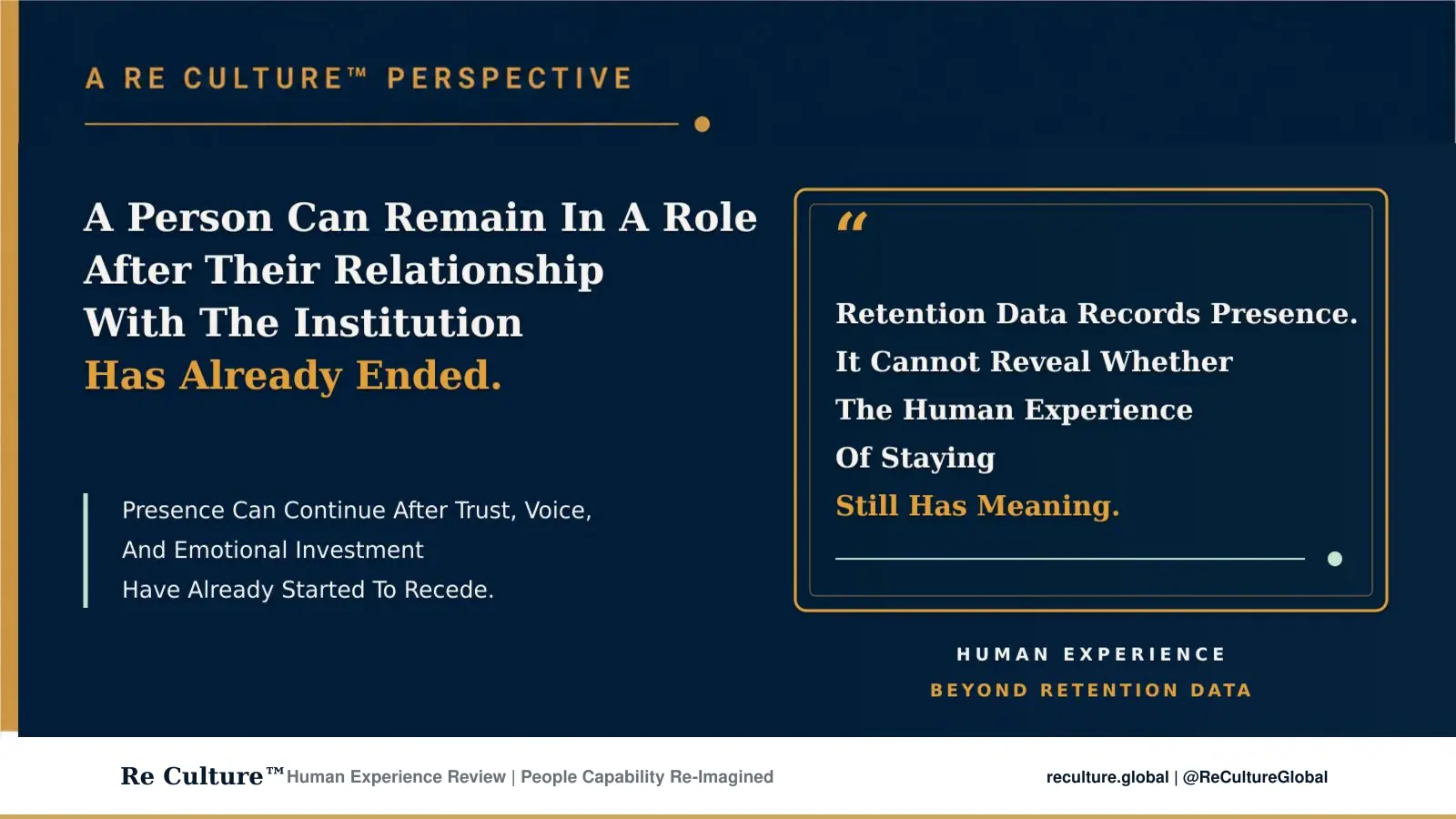
Presence Can Continue After Trust, Voice, And Emotional Investment Have Already Started To Recede.
Remaining In A Role Does Not Prove That A Person’s Relationship With The Institution Still Holds Meaning, Just As Permanent Reachability Does Not Prove Deeper Commitment. Visible Presence Can Continue While Trust, Voice, And Emotional Investment Recede, And Work Can Enter Recovery Time Until Disengagement Feels Unsafe. A Human Institution Reads The Quality Of The Relationship, Protects Boundaries And Recovery, And Evaluates Commitment Through The Quality, Integrity, And Meaning Of Contribution Rather Than The Amount Of Life Work Is Allowed To Occupy.
The Sixth Module Connects Exhaustion Misread As A Lack Of Resilience With Recovery Left To The Individual Outside Conditions That Remain Unchanged.
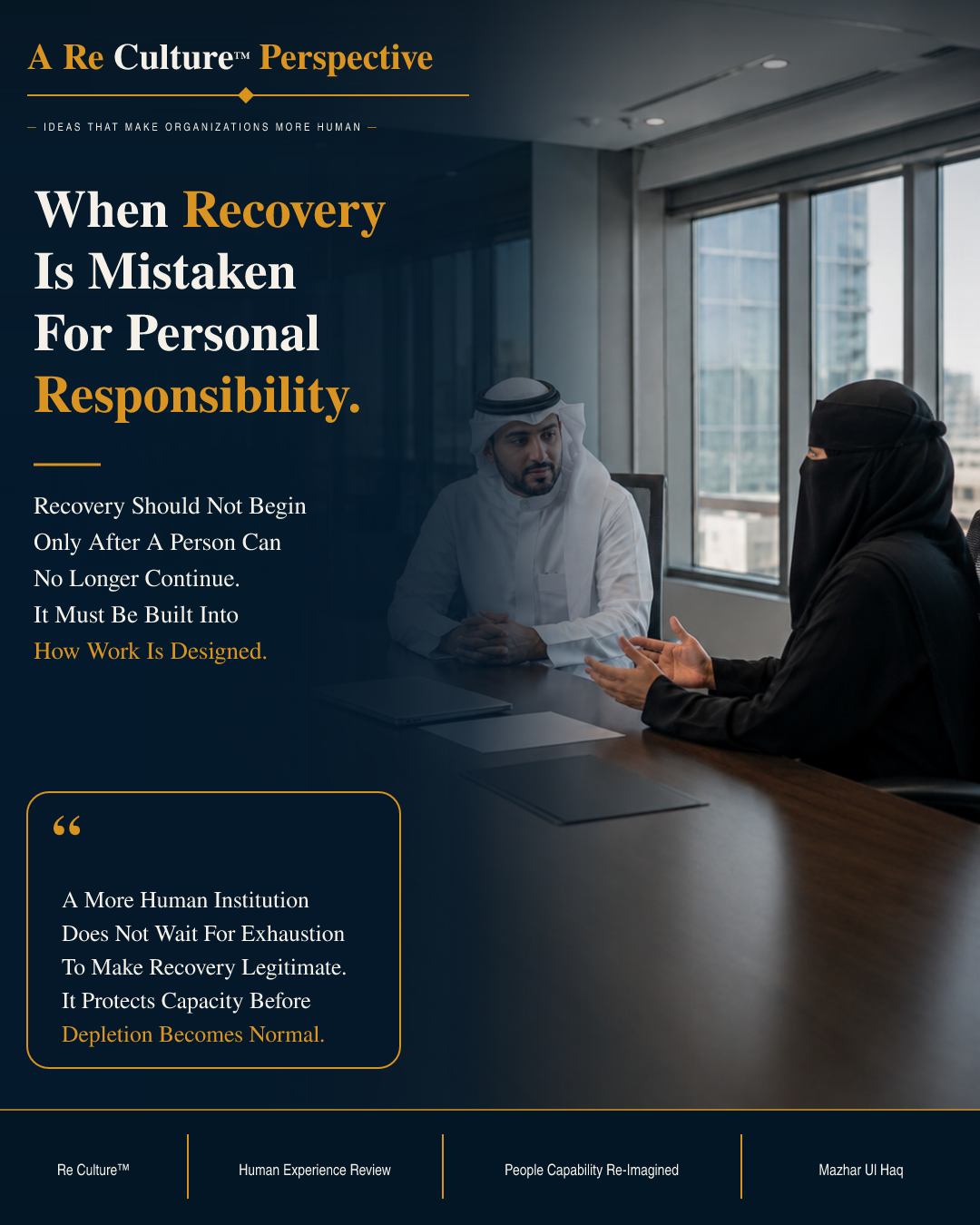
Recovery Should Not Begin Only After A Person Can No Longer Continue. It Must Be Built Into How Work Is Designed.
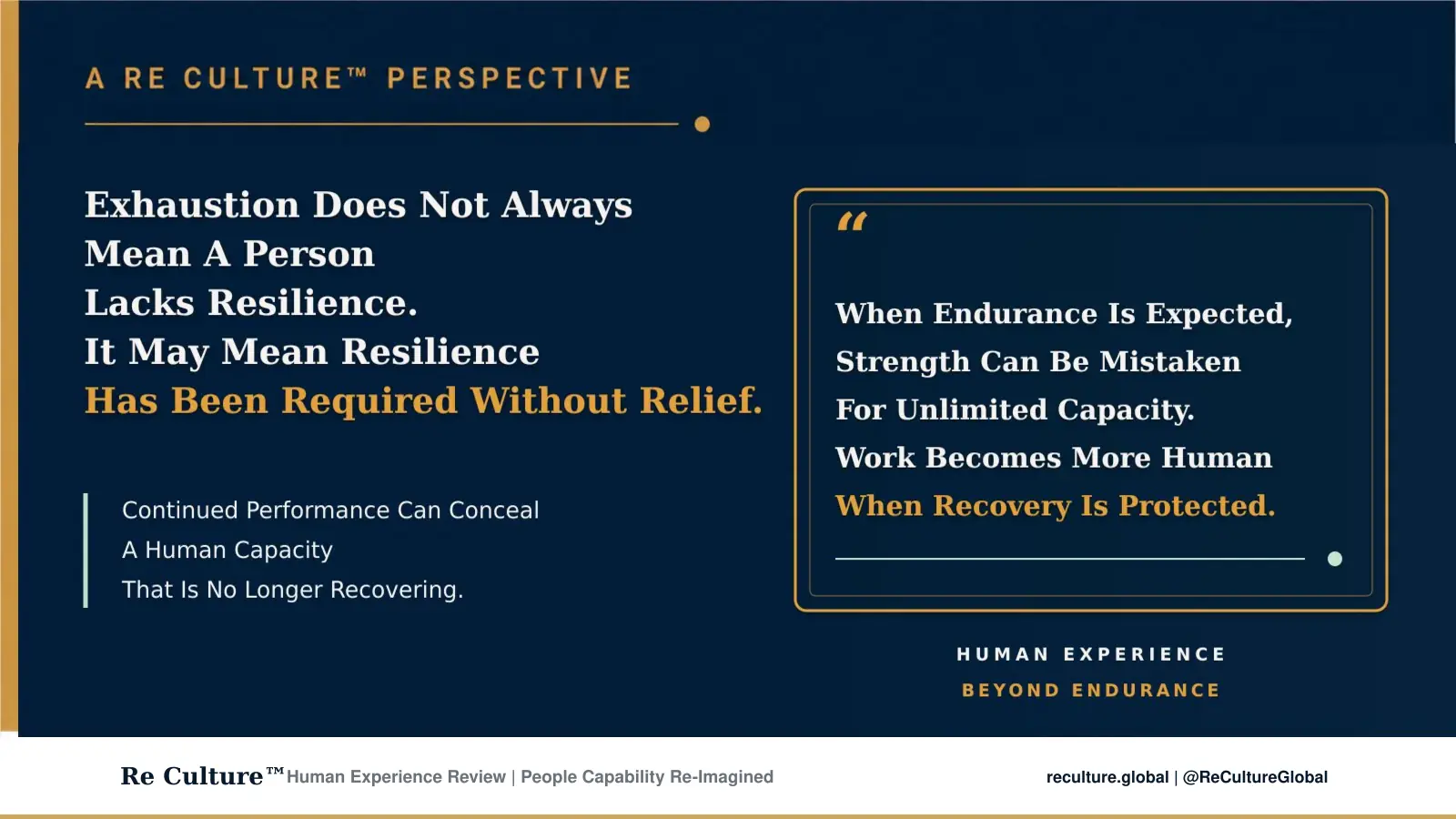
Continued Performance Can Conceal A Human Capacity That Is No Longer Recovering.
A Person May Continue Performing After Their Capacity Has Stopped Recovering, Then Be Asked To Repair Sleep, Attention, Motivation, And Emotional Energy Outside The Conditions That Depleted Them. A Human Institution Does Not Read Exhaustion As A Personal Resilience Deficit Or Leave Recovery To The Individual Alone. It Builds Rest, Reduced Demand, Clarity, And Protection From Permanent Access Into Work Design Before Depletion Becomes Normal.
The Seventh Module Connects Recovery As An Institutional Responsibility With Wellbeing As An Outcome Of How Work Is Designed And Lived.
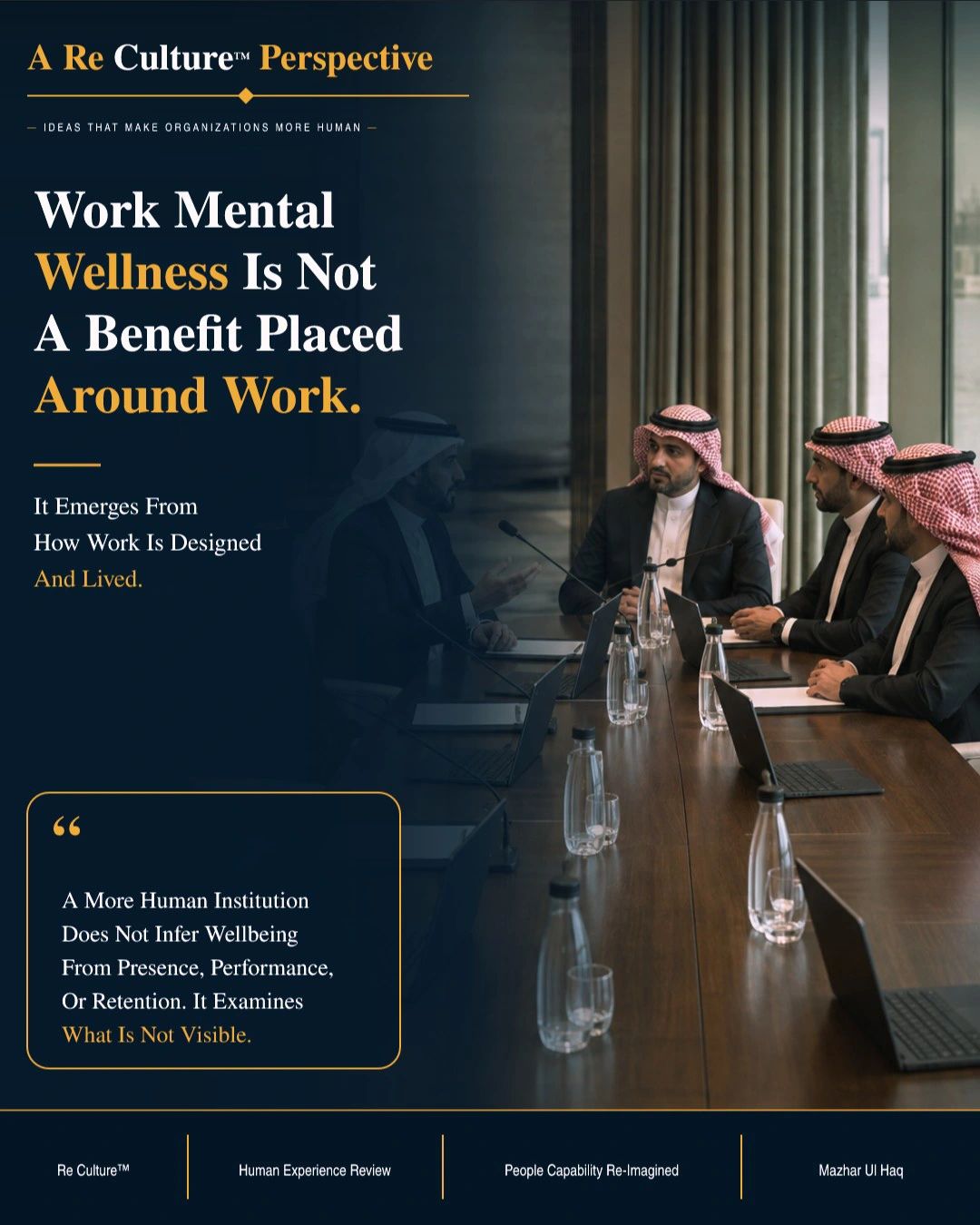
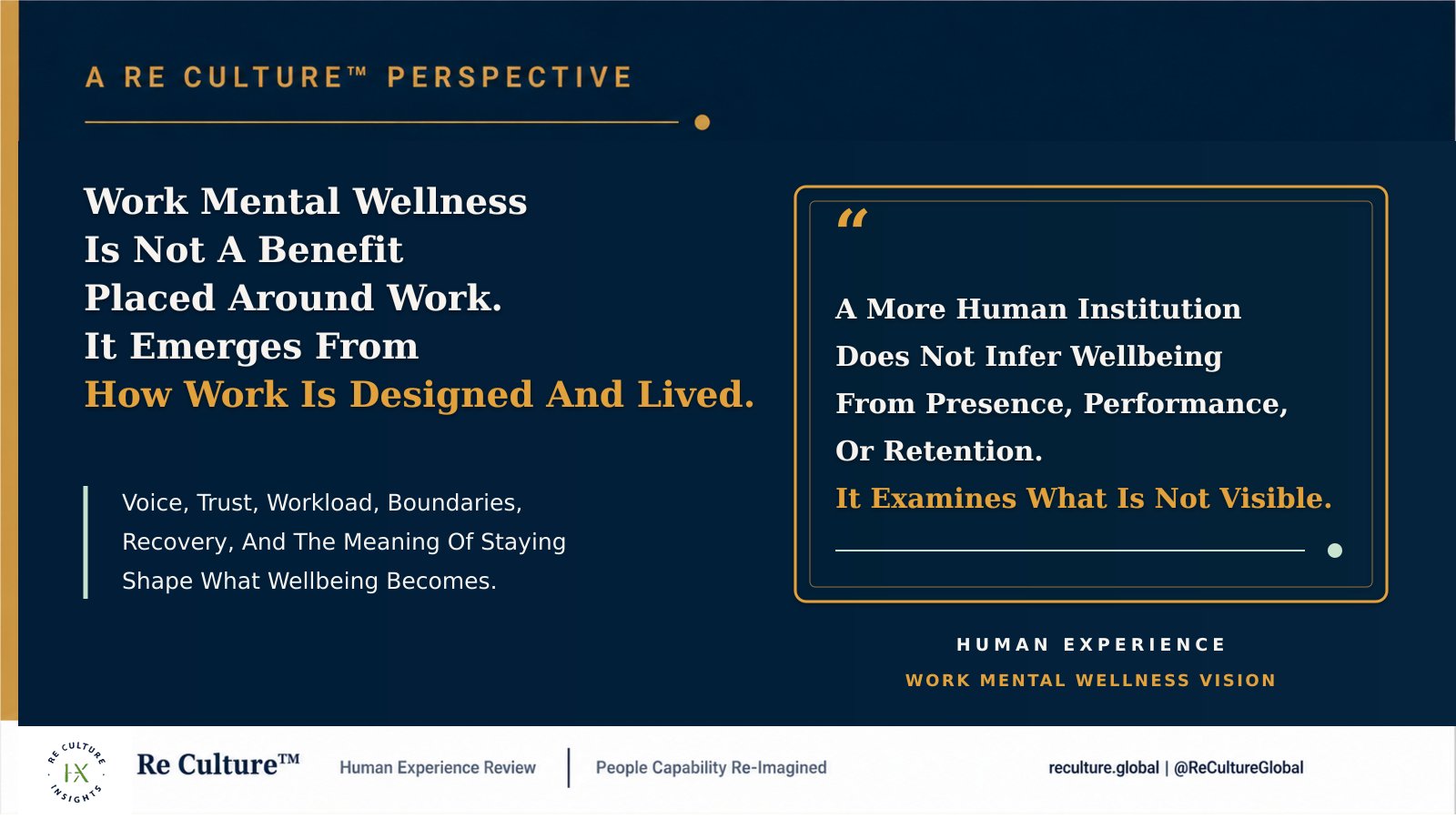
Work Mental Wellness Is Not A Benefit Placed Around Work. It Emerges From How Work Is Designed And Lived.
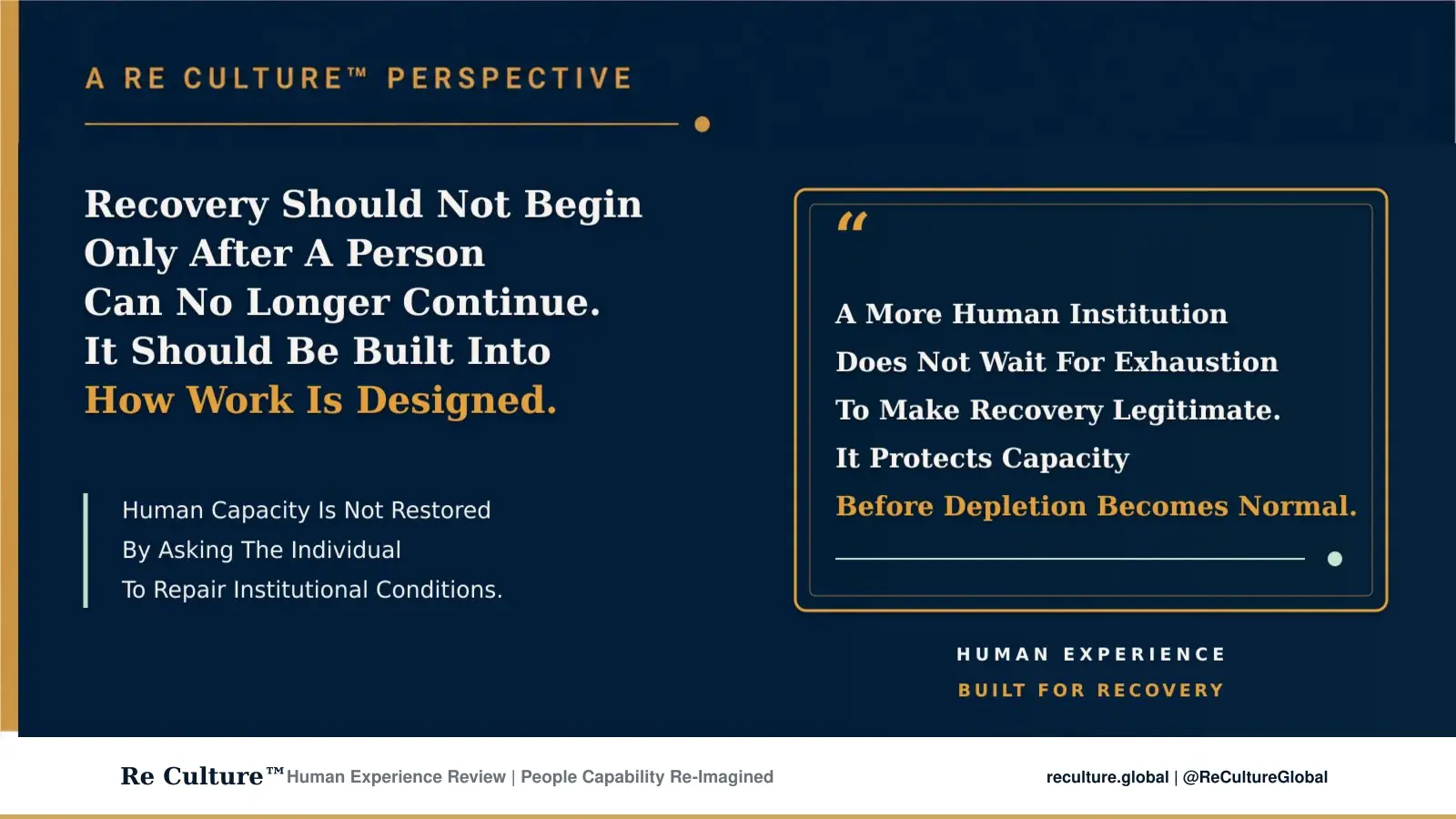
Recovery Is An Institutional Responsibility. Human Capacity Is Not Restored By Asking The Individual To Repair Institutional Conditions.
Presence, Performance, And Retention Cannot Prove Wellbeing While Work Still Produces Exhaustion, Silence, Uncertainty, Or Permanent Availability. Recovery As An Institutional Responsibility Shows That Capacity Is Protected Before Leave Or Collapse Through Load, Pace, Clarity, Decision Rights, Psychological Safety, Boundaries, And Resources. A Human Institution Does Not Place Wellbeing Around Work As A Benefit. It Builds Wellbeing Into How Work Is Designed, Led, And Lived.
Module 08 Preserves Cards 18–20 As Three Independent X-Led Sections Without Invented LinkedIn Counterparts. All Three Cards Are Complete With Verified Original Links And Final Placement.
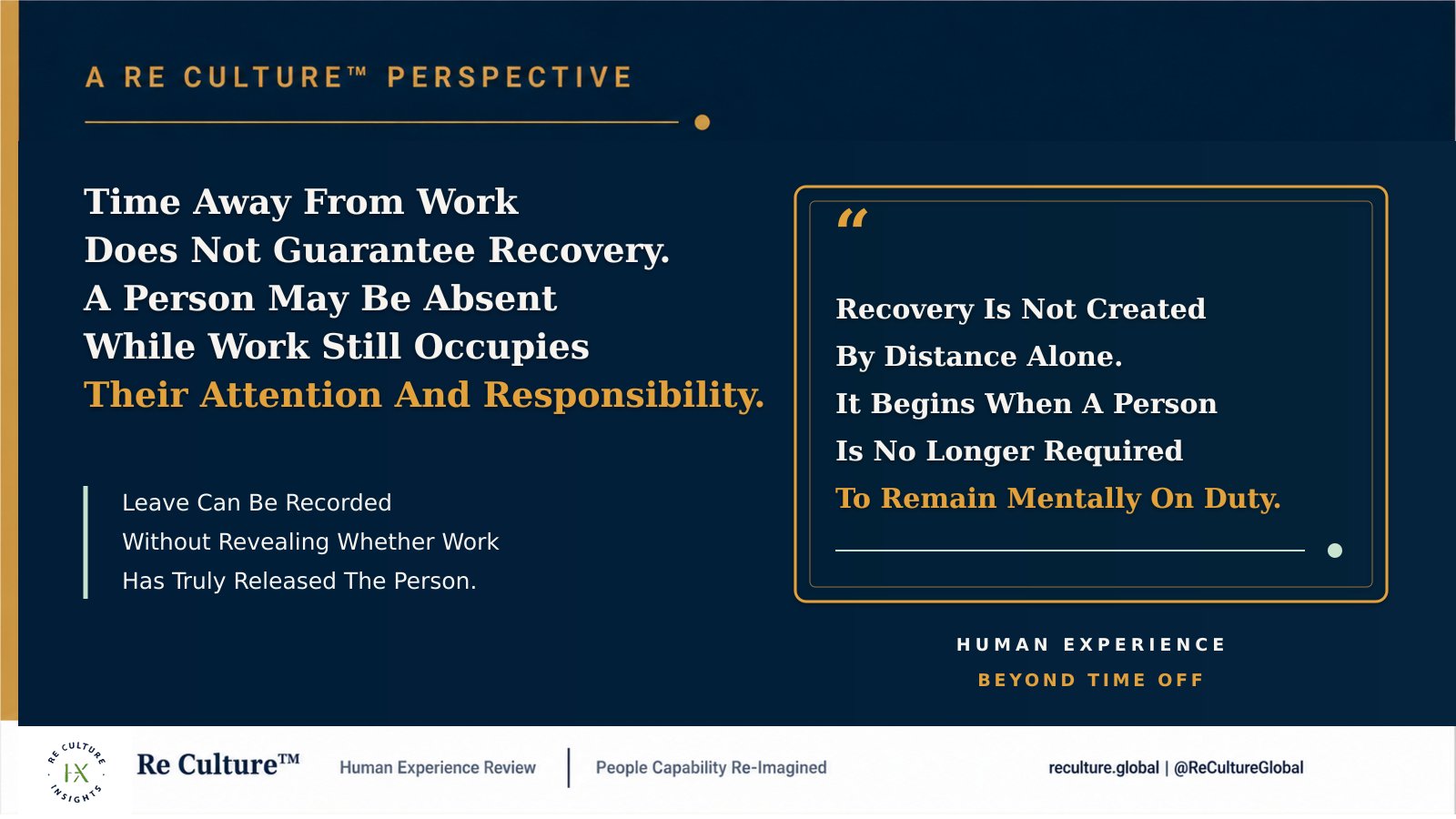
Permission To Be Away Is Not The Same As Freedom From Work. Recovery Becomes Possible When Time Off Carries No Hidden Obligation To Stay Connected.
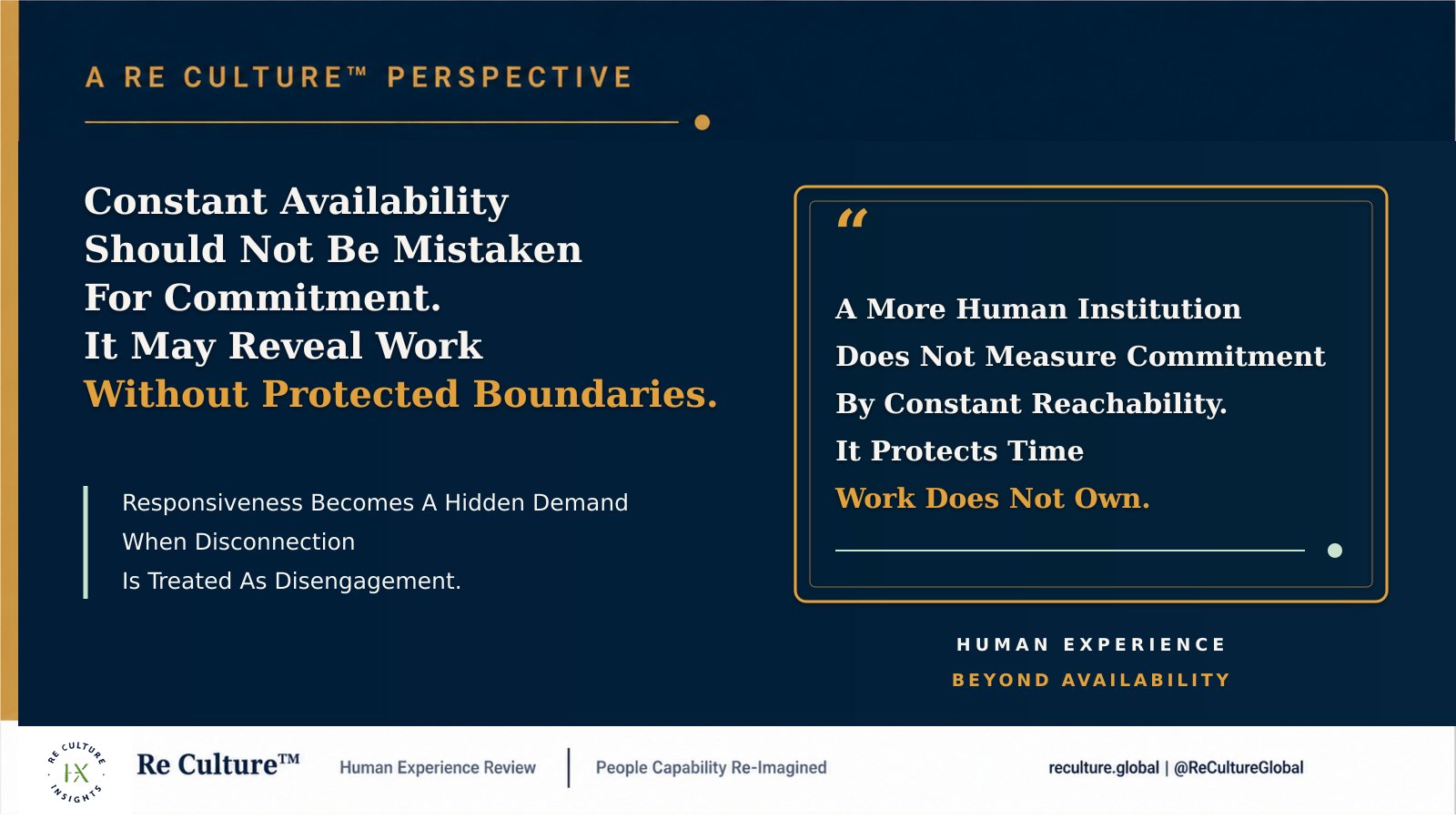
Permanent Reachability May Reveal Work Without Protected Boundaries. A More Human Institution Protects Time Work Does Not Own.
It May Be What Their Continued Work Is Requiring Them To Carry, Withhold, And Endure.
Cards 18–20 Show That Physical Distance Is Insufficient While Mental Responsibility Continues, That Constant Reachability Can Convert Commitment Into A Hidden Claim On Life Beyond Work, And That Continued Presence And Performance Cannot Reveal What People Are Required To Carry, Withhold, And Endure. This Meaning Is Preserved Within The Magazine’s Final Editorial Publication.
The Quality Of The Experience A Person Carries While Staying Reveals What Retention Data Cannot Say Alone.
The Letter Is The Visible Record Of A Human Process Formed Through Accumulated Experience, Decisions, And Silence.
Leadership, Load, Voice, Fairness, Boundaries, And Recovery Shape Whether Staying Remains Humanly Sustainable.
All Eight Modules Are Complete: Visuals 01–07 With Cards 11–17, Followed By Cards 18, 19, And 20 As Three Independent X-Led Sections. Every Publication Remains Preserved Within Its Original Stream And Permanent Link.
The Independent Professional Reading Follows Module 08 As The Closing Substantive Section In This Final Editorial Publication. The Arabic Contribution Remains The Controlling Source Of Meaning. The Re Culture™ English Translation Preserves The Contribution’s Meaning, Wejdan Faqihi’s Name, Professional Title, Attribution, And Context.
I Read Workplace Mental Wellness Vision | Magazine Carefully, And I Sincerely Commend You For This Profound And Humane Approach. As A Psychologist And Career Counselor, I Find That This Perspective Touches The Reality We Encounter Every Day In Workplaces.
Here Is My Reading And Professional Opinion In Brief Points:
The Meaningful Connection Showing That "Staying, Performing, And Remaining Silent" Does Not Necessarily Mean That "Psychological Wellbeing" Is Present; It May Instead Be Silent Burnout.
The Proposition That Recovery And Psychological Wellbeing Are Not Merely Dry Benefits Or Separate Initiatives, But Part Of The Structure Of The Workday Itself.
The Breadth Of The Dimensions—Voice, Trust, Boundaries, Workload, Recovery, And The Meaning Of Staying—Makes Them An Excellent Framework For Examining The Institutional Environment.
Translate The Six Dimensions Into A Quick Measure Or Self-Assessment Checklist That Leaders Can Use For A Periodic Survey.
Place Greater Emphasis On Training Direct Managers, Because The Manager Is The First Influence On An Employee’s Psychological Health And Ways Of Communicating.
Add Guidance On How Confidential Career And Psychological Counseling Sessions Can Be Made Available To Employees, Translating The Idea Of Recovery Into Practical Steps.
The Magazine Is Excellent And Can Be Regarded As A Refined Educational And Awareness Reference That Changes The Stereotypical Image Of Psychological Wellbeing In Workplaces. Thank You For The Effort, And I Wish You Every Success.
This Reading Is Presented As An Independent Professional Review, Not As Endorsement, Academic Peer Review, Accreditation, Certification, Empirical, Clinical, Or Legal Validation, Partnership, Or Proof Of Outcomes. The Re Culture™ Response, Development Choices, And Publication Decisions Remain Separate From The Reviewer’s Words.
Ustadha Wejdan Faqihi’s Reading Is Published Within The Magazine’s Complete Context. Her Contribution Must Not Be Separated From This Context Or Issued As An Independent Excerpt Or Teaser.
This Final Editorial Publication Was Delivered In English And Arabic Through The Official Re Culture™ WhatsApp Channel On 14 September 2026. The Live Site Remains The Canonical Publication Record.
Follow The Official WhatsApp ChannelThis Statement Records The Work’s Intellectual Origin, AI-Assisted Development, Human Responsibility, And Evidence Boundary.