
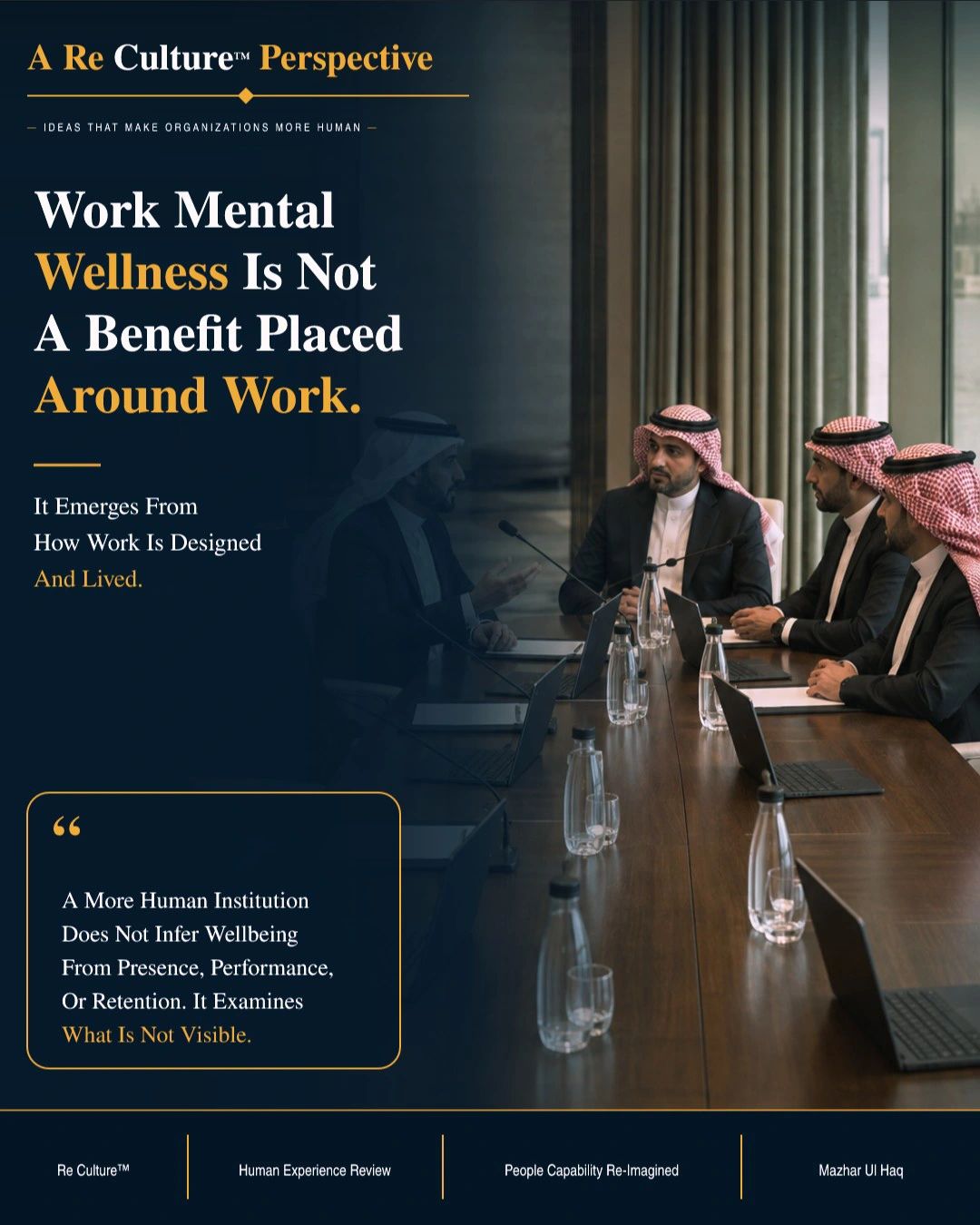
Work Mental Wellness Is Not A Benefit Placed Around Work. It Emerges From How Work Is Designed And Lived.
Many Institutions Address Wellbeing Through Awareness, Counselling, Resilience, And Recovery Initiatives. These Can Matter. Yet They Cannot Protect People When Work Still Produces Exhaustion, Uncertainty, Silence, Or Uninterrupted Availability.
Wellbeing Cannot Remain An Offering At The Edge Of An Operating Model That Repeatedly Depletes Human Capacity At Its Centre.
This Is Why Presence Alone Cannot Confirm Wellness. Performance Cannot Confirm Sustainability. Retention Cannot Confirm Belonging. A Person May Continue To Attend, Deliver, Adapt, And Remain While Carrying A Human Reality That The Institution Has Never Learned To See.
Across This Work Mental Wellness Series, One Distinction Has Remained Central. Staying Must Not Be Mistaken For Wellness. Performance Must Not Be Mistaken For Wellness. Endurance Must Not Be Mistaken For Resilience. Silence Must Not Be Mistaken For Stability. Availability Must Not Be Mistaken For Commitment. Recovery Must Not Be Reduced To A Personal Responsibility After Work Has Already Taken Too Much.
These Are Not Separate Problems. They Reveal The Same Institutional Concern: The Design Of Work May Require People To Absorb Too Much Simply To Remain Functional Within It.
A More Human Institution Examines What Is Usually Left Outside The Wellbeing Conversation. It Examines Workload, Pace, Role Clarity, Decision Autonomy, Leadership Responsiveness, Psychological Safety, Recovery Rhythms, Boundary Respect, Resource Adequacy, And The Human Consequences Of How Performance Is Governed.
Work Mental Wellness Does Not Mean Removing Every Difficulty From Working Life. It Means Ensuring That Pressure Does Not Become Permanent Depletion, That Difficulty Does Not Become Silent Isolation, And That Asking For Support Does Not Place Dignity, Trust, Or Progression At Risk.
This Requires More Than A Programme. It Requires Leaders To Discuss Wellbeing With The Same Seriousness Given To Performance, Risk, Capability, And Continuity. People Decisions Must Consider Not Only What Work Produces, But What Its Conditions Are Doing To The People Involved.
A More Human Institution Does Not Infer Wellbeing From Presence, Performance, Or Retention. It Examines What Is Not Visible.
When Work Is Designed With Human Capacity In View, Wellbeing Is No Longer An Additional Benefit. It Becomes Part Of How The Institution Thinks, Decides, Operates, And Sustains The People Through Whom Its Purpose Becomes Real.
What Must Change In The Design Of Work Before Wellbeing Can Become A Lived Institutional Condition Rather Than An Additional Offering?