
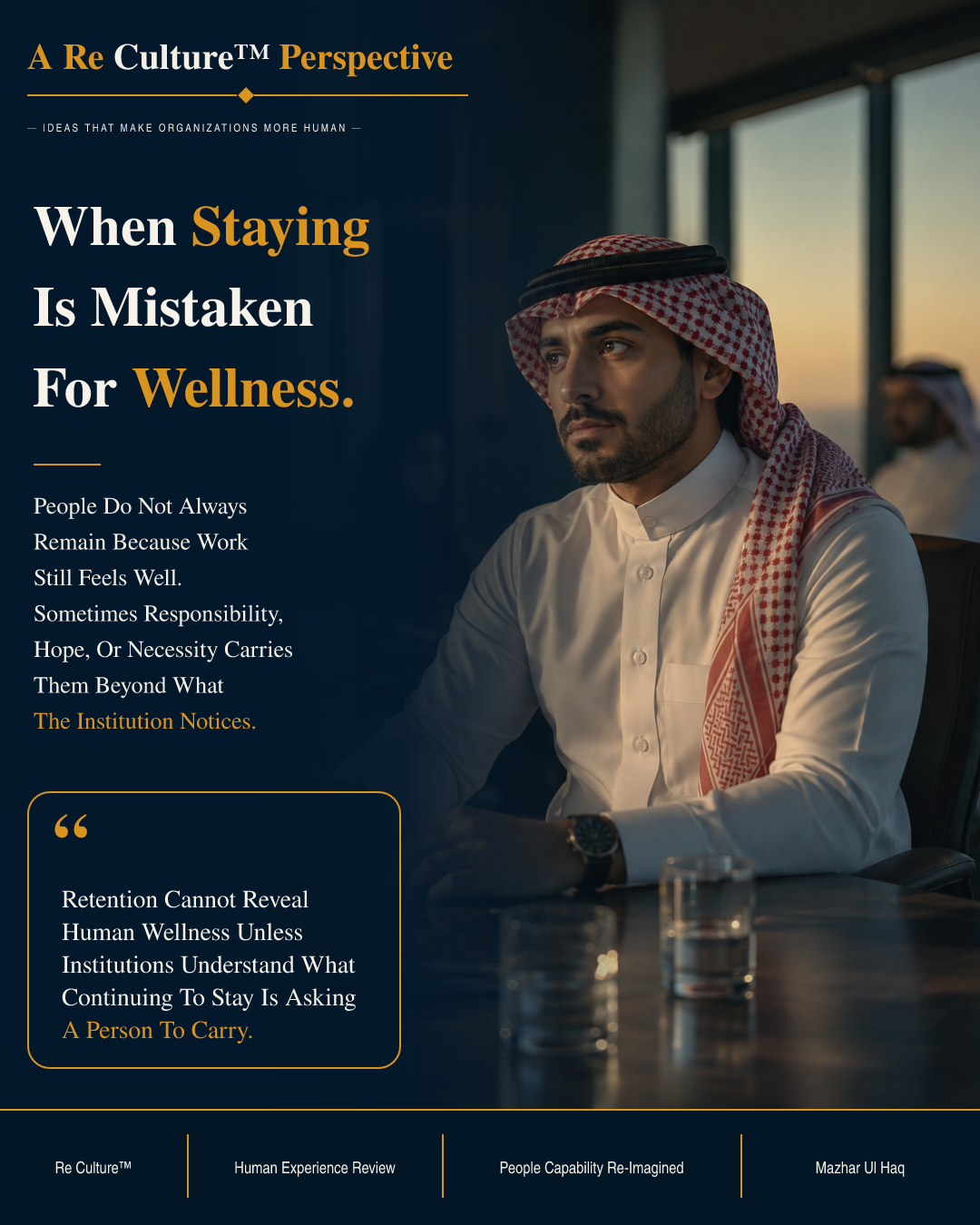
An Organization May Look At Its Retention Data And See Stability. A Person Living Inside The Same Period May Remember How Much Energy It Took To Continue Appearing Stable.
Employment Records Presence. It Does Not Automatically Record Connection, Trust, Safety, Voice, Or Meaning. People Remain For Many Responsible And Human Reasons: Family Commitments, Financial Continuity, Professional Identity, Hope That Conditions May Improve, Loyalty To Colleagues, Or The Simple Need To Protect What Has Already Been Built.
None Of These Reasons Make Staying False. But They Do Mean That Retention Cannot Be Read As Automatic Evidence That The Relationship Between A Person And The Institution Is Well.
A Person May Continue To Deliver, Attend, Respond, And Meet Expectations While Becoming More Careful About What They Say, Less Willing To Ask For Help, More Dependent On Recovery Outside Work, Or Increasingly Detached From The Purpose They Once Felt. Performance Can Remain Visible Even While The Human Conditions That Sustain It Are Narrowing.
This Is Why Work Mental Wellness Must Be Examined Institutionally, Not Only Individually. Not Every Difficult Experience Should Be Given A Clinical Label. The More Responsible Inquiry Is Whether Workload, Leadership Behavior, Fairness, Autonomy, Recovery, Recognition, And The Response To Voice Are Creating Conditions In Which People Can Continue Without Having To Withdraw From Themselves.
Retention Data Becomes More Honest When It Is Read Beside The Quality Of The Experience Being Retained. Institutions Must Distinguish Between People Who Continue Because Trust Has Been Earned And People Who Continue Because The Consequences Of Leaving Feel Greater Than The Conditions Of Staying. They Must Also Notice Whether Rest Is Safe, Whether Voice Carries A Cost, And Whether Contribution Is Being Sustained By Commitment Or By Silent Overextension.
These Are Not Matters For A Dashboard Alone. They Belong To Leadership, Culture, And Institutional Design.
The Work Mental Wellness Vision Invites Organizations To Look Beyond Whether People Are Still Employed And Examine Whether They Are Still Humanly Present, Relationally Connected, And Able To Contribute Without Quietly Exhausting The Capacities On Which The Institution Depends.
Retention Should Never Become A Way Of Counting People While Failing To Understand The Human Reality Being Carried Beneath Continued Employment.
What Might Continued Presence Be Concealing About The Quality Of Human Experience Inside Your Institution?