
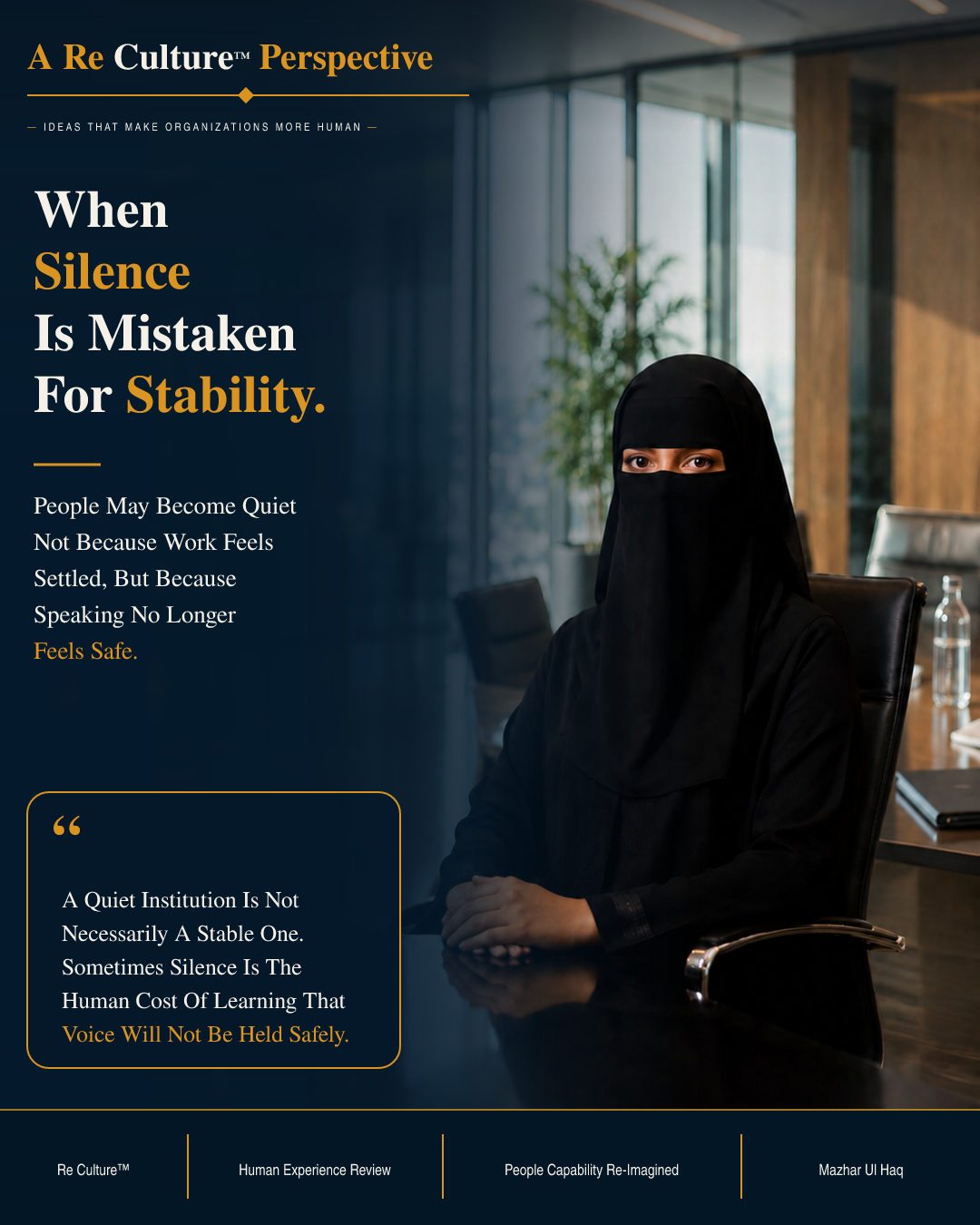
Silence Is Often Interpreted As Agreement. In Meetings, It Can Resemble Alignment; During Change, Acceptance; After A Difficult Decision, Evidence That The Institution Has Settled.
Yet Silence Says Very Little On Its Own. Its Meaning Depends On What People Believe Speaking Will Ask Them To Risk.
A Person May Withhold A Concern Because Earlier Questions Were Dismissed, Reframed As Resistance, Or Met With Defensiveness. They May Have Watched A Colleague Pay A Relational Price For Naming What Others Privately Recognized. They May Still Care Deeply, Yet Decide That Protecting Their Dignity Or Credibility Requires Restraint.
This Does Not Mean Every Quiet Workplace Is Unsafe. Silence Can Reflect Thoughtfulness, Respect, Concentration, Or Genuine Agreement. The Institutional Responsibility Is Not To Demand Constant Expression. It Is To Understand Whether Voice Remains Genuinely Available When Something Important Needs To Be Said.
Psychological Safety Is Not Measured By How Frequently People Speak. It Is Revealed By Whether They Can Offer A Question, Concern, Mistake, Or Different Interpretation Without Expecting Disproportionate Professional Or Relational Consequence. Voice Becomes Credible When People Know They Will Be Heard Fairly, Even When Their Perspective Is Uncomfortable.
Leaders Must Examine What Happens After Voice Enters The Room. Is Curiosity Present Before Judgment? Are Difficult Messages Engaged With Substance, Or Redirected Toward The Person Who Raised Them? Does Disagreement Inform Learning, Or Quietly Alter How Someone Is Trusted And Included?
These Patterns Shape Work Mental Wellness Because People Read The Human Consequences Around Them. They Notice Which Questions Receive Patience, Which Concerns Alter Reputation, And Which Truths Are Welcomed Only After They Are No Longer Disruptive. Over Time, They May Edit Their Language, Delay Their Concerns, Or Carry In Private What The Institution Most Needs To Understand In Public.
A More Human Institution Does Not Treat Quiet As Proof That Nothing Is Wrong. It Creates Reliable Routes For Voice, Responds Without Retaliation, Distinguishes Challenge From Disloyalty, And Closes The Loop Even When A Concern Cannot Change The Decision. It Makes Speaking Worth The Human Risk It Requires.
Quiet Can Keep Tension Outside The Meeting. It Cannot Resolve The Conditions That Produced It.
A Quiet Institution Is Not Necessarily A Stable One. Sometimes Silence Is The Human Cost Of Learning That Voice Will Not Be Held Safely.
What Might Silence Be Protecting Inside Your Institution That Apparent Stability Has Prevented Leadership From Examining?