
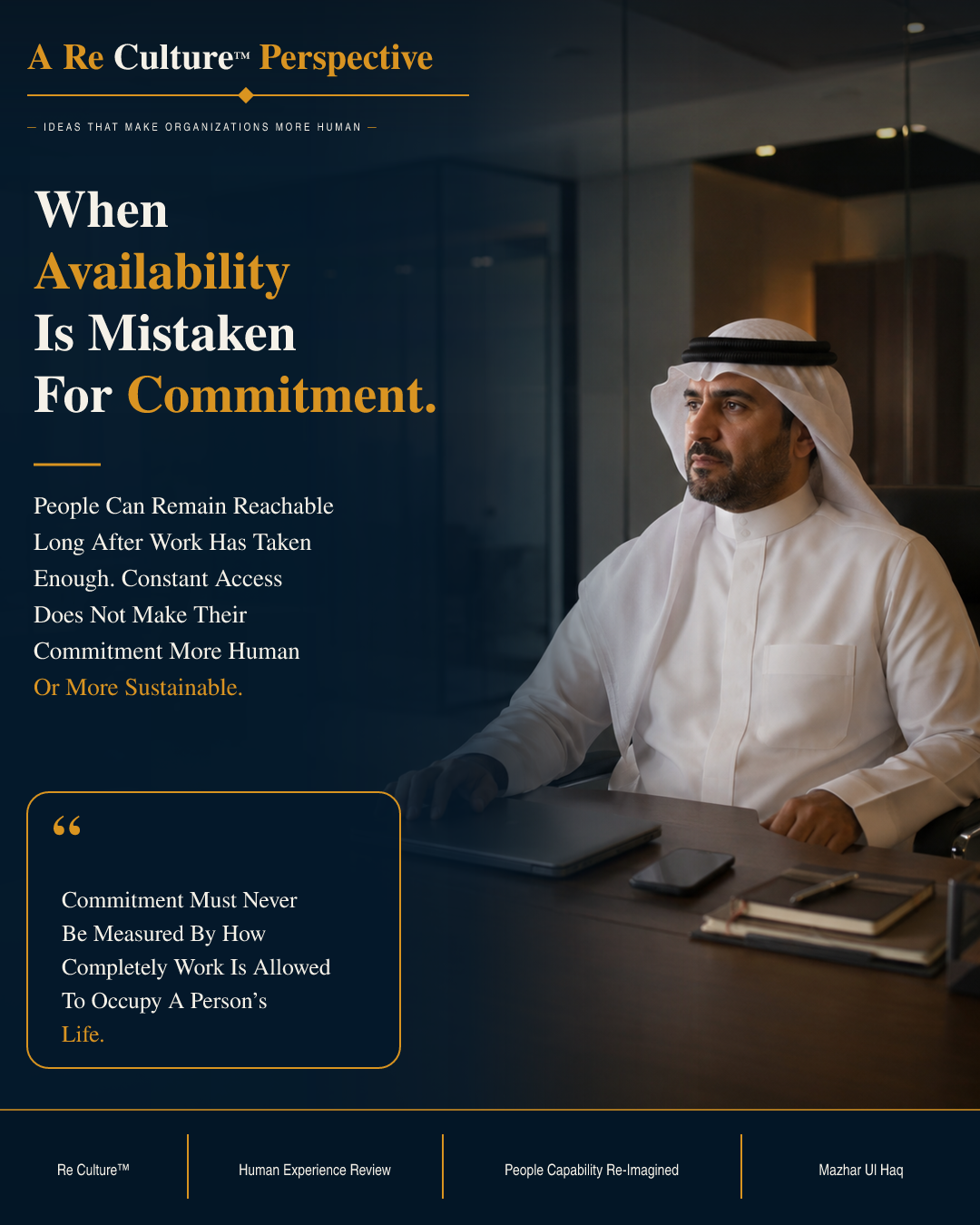
Availability Is Often Read As A Sign Of Commitment. The Person Who Replies Late, Remains Reachable During Rest, And Carries Messages Into Family Time May Be Described As Dependable. Yet What Appears To Be Commitment Can Reveal Something Else: Work Has Crossed Every Human Boundary.
Commitment Has Meaning When A Person Contributes With Care, Responsibility, And Purpose. It Becomes Distorted When Institutions Measure It Through Response Speed, Evening Access, Weekend Presence, Or The Willingness To Remain Permanently Interruptible. These Behaviors May Demonstrate Effort, But They Can Also Reveal Pressure, Fear, Unclear Expectations, Or A Workplace That Has Learned To Treat Human Availability As An Unlimited Resource.
A Message Sent After Working Hours May Take Only A Minute To Answer. But The Human Cost Is Not Always Contained In That Minute. It Can Be The Loss Of Psychological Distance From Work, The Interruption Of Recovery, The Quiet Anticipation Of The Next Request, And The Feeling That Personal Time Is Never Fully One’s Own.
This Is How Availability Can Become A Hidden Mental-Wellness Condition. Nothing May Be Formally Required, Yet Expectations Are Communicated Through Who Receives Praise, Who Is Considered Reliable, Whose Boundaries Are Questioned, And Whose Silence After Hours Is Interpreted As Reduced Commitment.
The Result Is Not Simply Longer Work. It Is A Human Being Remaining Cognitively At Work Even When Physically Elsewhere. Recovery Becomes Partial, Family Presence Becomes Divided, And Rest Becomes Watchful. The Institution Gains Access To More Hours While Gradually Weakening The Human Capacity On Which Meaningful Contribution Depends.
Healthy Boundaries Do Not Reduce Commitment. They Protect It From Becoming Extraction. A Person Who Can Disengage, Recover, Reconnect, And Return With Attention Has Not Abandoned Responsibility. They Have Preserved The Condition That Allows Responsibility To Remain Sustainable.
Leadership Therefore Carries A Deeper Obligation Than Telling People To Switch Off. It Must Examine What Makes Switching Off Feel Unsafe: Unspoken Response Norms, After-Hours Escalations, Leaders Who Model Permanent Access, Workloads That Exceed Working Time, And Recognition That Rewards Visible Sacrifice. Urgent Access Must Remain Exceptional, Defined, And Responsibly Distributed.
A More Human Institution Does Not Confuse Boundaries With Indifference. It Defines What Truly Requires Availability, Protects Time Work Does Not Own, And Evaluates Commitment Through The Quality, Integrity, And Meaning Of Contribution.
Constant Reachability May Make Work Easier To Access. It Does Not Make The Institution More Human, The Person More Committed, Or Their Contribution More Sustainable. Commitment Must Never Be Measured By How Completely Work Is Allowed To Occupy A Person’s Life.
What Expectations Inside Your Institution Make Disconnection Feel Less Safe Than Remaining Available?