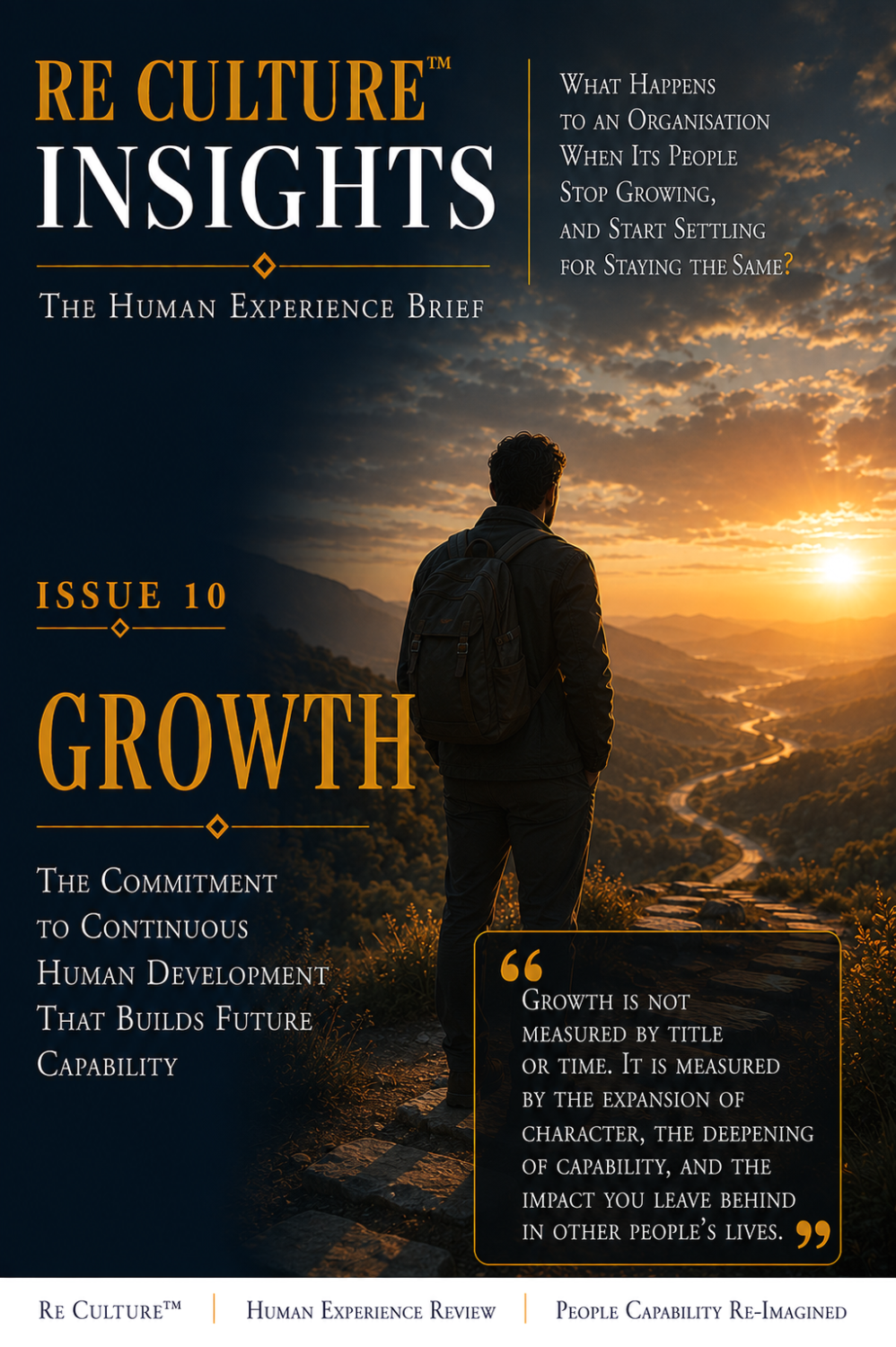
What This Issue Is About. This Issue Examines Growth As A Human Capacity Before It Becomes An Organizational Result. It Explores Why Sustainable Growth Depends Upon The Expansion Of Character, Capability, Confidence, Judgement, And Wisdom, And Why Leadership Must Create Conditions In Which People Can Become More Without Losing Dignity, Identity, Or Meaning.
Growth Is One Of The Most Celebrated Words In Business. Organizations Pursue Growth In Revenue, Market Share, Innovation, Influence, And Scale. Yet The Most Enduring Form Of Growth Is Often The Least Measured: The Growth Of Human Beings. Organizations May Expand Through Strategy, But They Endure Through The People Whose Capacity Continues To Deepen Within Them.
An Organization Can Increase Its Output While Diminishing The People Producing It. It Can Become Larger Without Becoming Wiser, Faster Without Becoming More Capable, And More Successful Without Becoming More Human. Growth That Depends Upon Exhaustion, Permanent Urgency, Or The Silence Of Those Carrying Its Demands May Produce Expansion, But It Does Not Produce Development.
Many Organizations Invest In Growth While Overlooking The Human Experience That Makes Growth Sustainable. They Expect People To Deliver More Without Creating The Conditions Through Which They Can Become More. They Measure Progress Through Outcomes While Neglecting The Development Of Character, Capability, Confidence, Judgement, And Wisdom Upon Which Those Outcomes Depend.
Human Growth Is Not Simply The Acquisition Of More Skills, Responsibilities, Or Credentials. It Is The Gradual Enlargement Of A Person's Ability To Understand Complexity, Exercise Judgement, Learn From Experience, Carry Responsibility, And Contribute Without Losing Identity. It Becomes Visible When People Think More Courageously, Collaborate More Generously, Question More Responsibly, And Act With A Deeper Awareness Of Their Effect Upon Others.
This Kind Of Growth Can't Be Demanded Into Existence. Challenge May Strengthen People, But Challenge Without Support Can Become Strain. Responsibility May Develop Confidence, But Responsibility Without Trust Can Become Fear. Feedback May Advance Capability, But Feedback Without Dignity Can Diminish The Person It Was Intended To Help. Human Growth Therefore Depends Not Only Upon What People Are Asked To Do, But Upon The Conditions In Which They Are Asked To Become.
The Organization Benefits When Human Development Is Allowed To Become Institutional Capability. Individual Learning Strengthens Collective Judgement, Greater Confidence Expands Contribution, Deeper Wisdom Improves Decisions, Responsible Autonomy Reduces Dependence Upon Constant Control. What Begins As Growth Within The Person Gradually Becomes Resilience, Adaptability, Trust, And Excellence Across The Organization.
Yet Human Growth Must Not Be Valued Only For The Organizational Return It Produces. People Are Not Resources To Be Enlarged For Greater Output. Their Development Holds Human Worth Beyond Performance, And An Organization Reveals Its Maturity When It Supports Growth That Enriches A Person's Judgement, Dignity, And Future, Even Beyond The Boundaries Of The Organization Itself.
Leadership Is Not Fulfilled By Creating Successful Organizations Alone. Its Greater Responsibility Is To Create Organizations Where People Leave Stronger Than They Arrived, Not Merely More Experienced, But More Capable Of Judgement, Contribution, Responsibility, And Meaningful Participation. This Requires Leaders To Consider Not Only Whether Growth Was Achieved, But What The Pursuit Of Growth Required People To Become, Endure, Or Surrender.
When Human Growth Becomes A Leadership Priority, Organizational Growth Ceases To Be A Temporary Achievement And Becomes A Lasting Capability. The Organization No Longer Advances Only Through What Its People Produce. It Advances Through What Its People Are Increasingly Able To Understand, Decide, Create, And Carry Forward Together.
At Re Culture™ We Believe The Future Will Not Belong Simply To The Organizations That Grow The Fastest. It Will Belong To Those That Grow Their People So Deeply, Responsibly, And Humanely That Sustainable Excellence Becomes A Natural Consequence Of Human Development.
Is Your Organization Measuring Growth Only By What It Gains Or Also By Who Its People Are Becoming?