
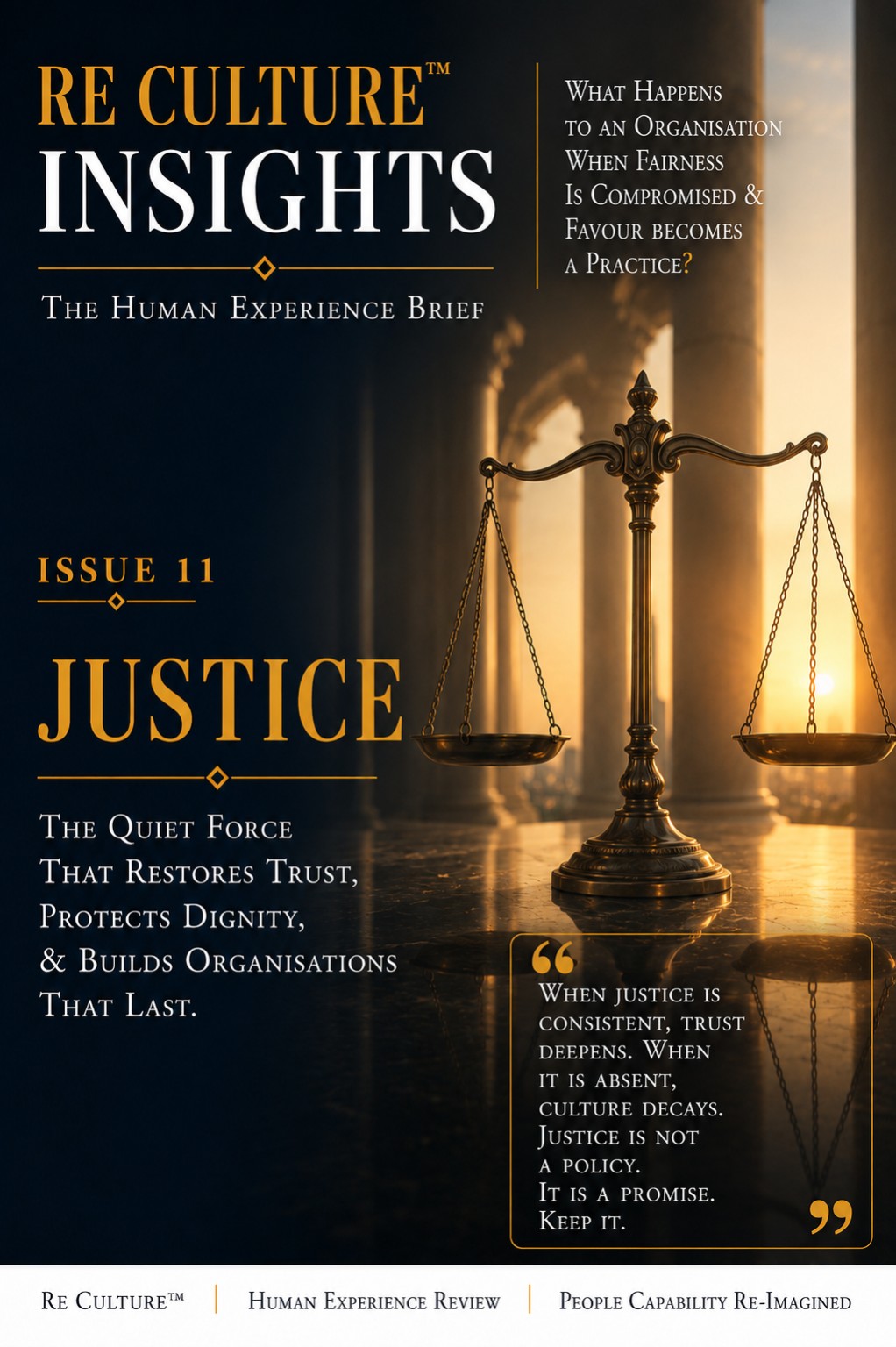
What This Issue Is About. This Issue Examines How People Experience Fairness In Decisions They Must Carry, Especially When The Outcome Is Difficult. It Follows What Happens When Criteria Are Unclear, An Exception Goes Unexplained, Or A Person's Contribution Is Not Seriously Considered. Justice Becomes Credible When The Person With Less Power Can Still Recognize Principle, Voice, And Dignity In The Process.
Every Organization Speaks About Fairness. Far Fewer Create A Human Experience That Consistently Reflects It. Justice Is Not Defined By Policies Alone. It Is Experienced Through Everyday Decisions That Quietly Tell People Whether They Will Be Treated With Dignity, Impartiality, And Respect.
A Person May Accept That An Opportunity Went To Someone Else. What Remains Difficult To Accept Is Discovering That The Criteria Were Never Clear, That An Exception Was Made Without Explanation, Or That Their Own Contribution Was Never Seriously Considered.
The Decision May Be Complete In The Institution’s Record. For The Person Who Lives With It, The Experience Is Still Unfolding. They Are Learning Whether Merit Can Be Trusted, Whether Their Voice Has Weight, And Whether The Principles Spoken By Leadership Will Hold When Preference Or Convenience Pulls In Another Direction.
Justice Begins In These Ordinary Moments. It Appears In How Opportunities Are Shared, How Mistakes Are Addressed, And Whether A Difficult Decision Is Explained With Enough Honesty To Respect The Person Affected. Fairness Does Not Require Every Person To Receive The Outcome They Wanted. It Requires The Institution To Remain Principled In The Way It Reaches And Carries That Outcome.
An Organization Can Continue To Receive Performance After Confidence Has Begun To Leave. People May Fulfil Their Responsibilities While Quietly Withholding The Trust, Candour, And Hope That Once Made Their Contribution More Than Compliance. The Loss May Be Gradual, Yet Its Meaning Is Profound.
Organizations Rarely Lose Their Strongest People Overnight. They Lose Them Gradually, When Merit Appears Secondary To Preference, When Transparency Gives Way To Ambiguity, And When The Principles That Guide Leadership Depend Upon Circumstance Rather Than Character.
Leadership Is Never Measured Solely By The Decisions It Makes. It Is Measured By Whether Those Decisions Leave People Believing They Were Treated Justly. Even Difficult Outcomes Can Preserve Trust When The Process Reflects Integrity, Respect, And Human Dignity.
At Re Culture™, We Believe Justice Is A Human Experience Before It Is An Institutional Claim. Leadership Gives That Claim Credibility Through Decisions People Can Understand, Principles They Can Recognize, And Dignity They Can Still Feel When The Answer Is Difficult.
Justice Is The Confidence That Fairness Will Hold Even When The Person Affected Has Less Power Than The Person Deciding.
Would The People In Your Organization Describe Your Leadership As Powerful, Or As Fair?