
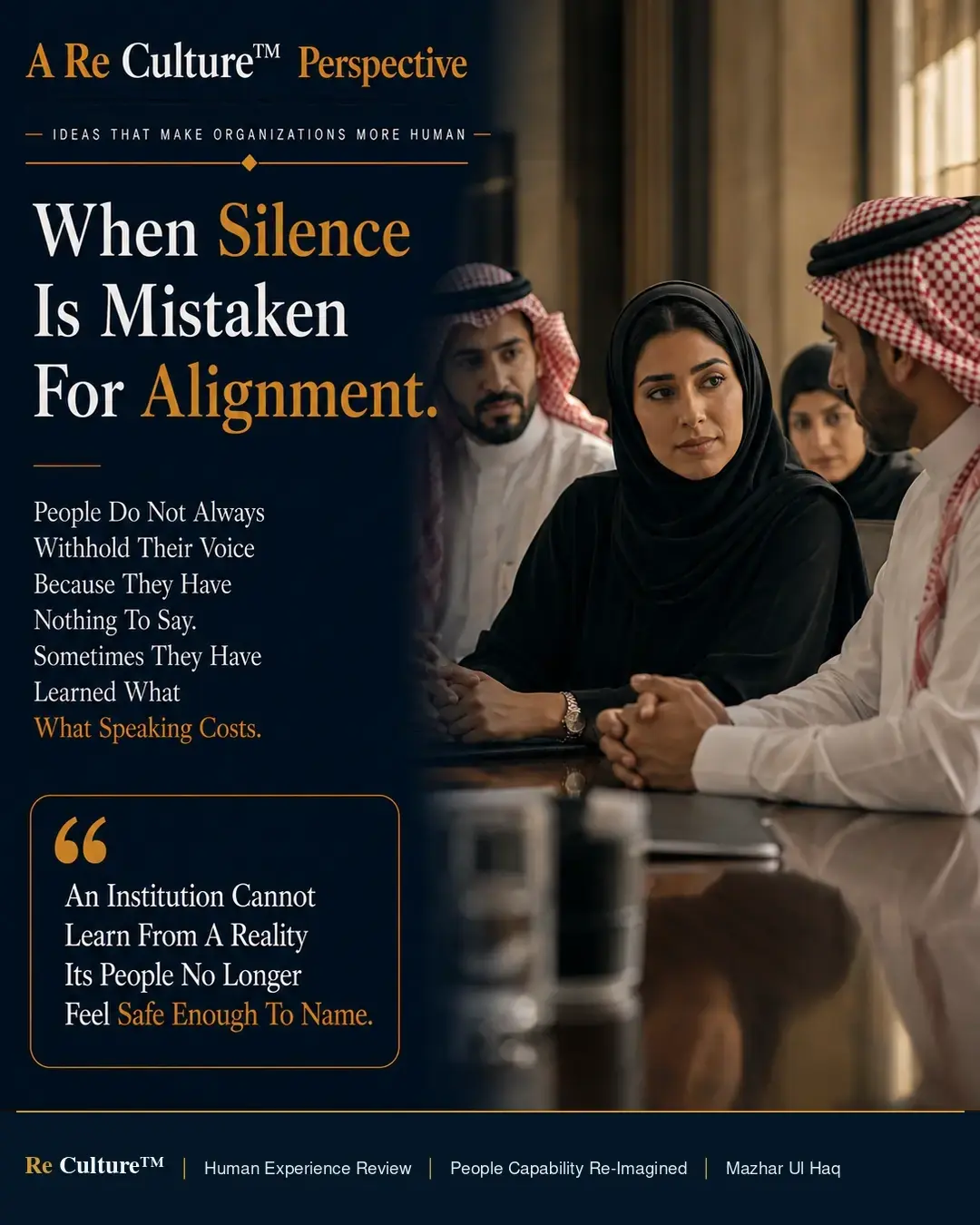
Organizations Interpret Silence As The Absence Of Difficulty. No Objection Is Raised. No Conflict Becomes Visible. From A Distance, This Resembles Alignment. Yet Silence Is Rarely Empty. It Is Often A Human Record Of What People Have Learned The Institution Can—And Cannot—Bear To Hear.
Silence Begins Before People Stop Speaking. It Begins When They Translate What They Know Into What Authority Will Accept. A Fact Becomes A Managed Suggestion. A Concern Is Softened Until Urgency Disappears. A Difficult Truth Moves From The Meeting Room Into Private Conversation. By The Time Leadership Receives The Message, Reality Has Already Been Edited Into Reassurance.
This Is Not Merely A Communication Failure. It Is A Loss Of Institutional Perception. An Organization That Cannot Hear Its People Cannot Know Itself. It May Continue To Measure Performance, Review Risk, And Produce Confident Decisions While Becoming Less Able To See The Human Reality Those Decisions Create.
Power Can Intensify This Distance. The Higher A Person Moves Within An Institution, The More Reality May Arrive Filtered Through Hierarchy, Caution, Loyalty, And Anticipated Consequence. Authority Can Create The Impression Of Greater Knowledge While Reducing Access To Unprotected Truth. Unless Leadership Protects Candour, Position Can Become Insulation.
For The Individual, Silence Is Often Misread As Disengagement. Yet Withholding A Voice Can Be An Act Of Preservation. People Learn To Protect Their Dignity, Livelihood, Relationships, And Professional Identity When Honesty Appears More Dangerous Than Agreement. They May Continue To Contribute Their Labour While Withdrawing The Judgement The Institution Most Needs.
Genuine Alignment Is Not Quiet Uniformity. It Is The Institutional Capacity To Remain Together While Reality Is Named, Assumptions Are Challenged, And Difference Is Met Without Turning Dissent Into Disloyalty. A Human Institution Does Not Merely Invite People To Speak. It Establishes Through Repeated Experience That Speaking Will Not Require Them To Sacrifice Their Security Or Their Wholeness.
The Greatest Test Of Leadership Is Not Whether People Speak When They Are Asked. It Is Whether They Remain Respected After They Do. The Response To One Difficult Truth Becomes A Cultural Message To Everyone Who Witnesses It.
When People Stop Speaking, Leadership Does Not Inherit Peace. It Inherits An Increasingly Incomplete Account Of The Institution It Is Responsible To Understand. An Institution Cannot Learn From A Reality Its People No Longer Feel Safe Enough To Name.
What Reality Might Your Institution Be Losing Because Its People Have Learned To Edit What They Know?