
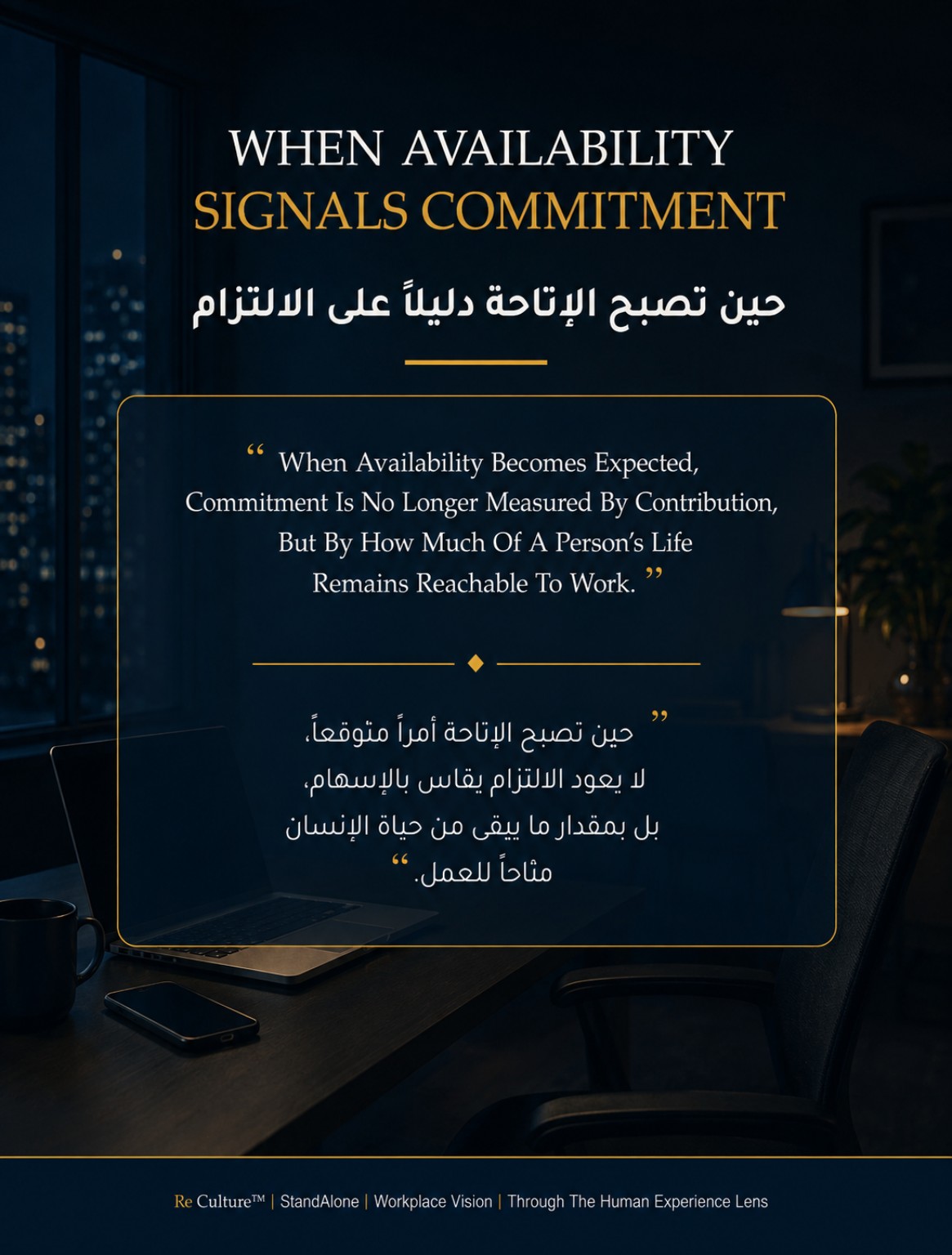
It Often Begins With Something That Appears Small, A Message Answered After Dinner, A Call Taken During Rest, Or A Weekend Kept Partly Open In Case Someone From Work Needs A Response. No One May Explicitly Say That A Person Must Always Be Reachable. Yet Those Who Respond Fastest Are Remembered As Committed, While Those Who Protect Their Time Can Quietly Be Read As Less Invested. Availability Then Stops Being A Practical Exception And Becomes Evidence Of Commitment.
Workplaces Can't Ask People To Protect Their Wellbeing While Preserving The Conditions That Keep Rest Interruptible And Boundaries In Need Of Defence.
The Future Of Work Will Be Shaped Not Only By Where People Work, How Technology Extends Capacity, Or How Rapidly Organisations Operate. It Will Also Be Shaped By Whether Institutions Can Recognize The Parts Of Human Life That Work Must Not Continuously Occupy.
A Work Wellness Vision Begins There: Not By Asking People To Recover More Efficiently, But By Designing Work That Doesn't Repeatedly Consume The Uninterrupted Time, Mental Distance, And Human Presence That Recovery Requires.