
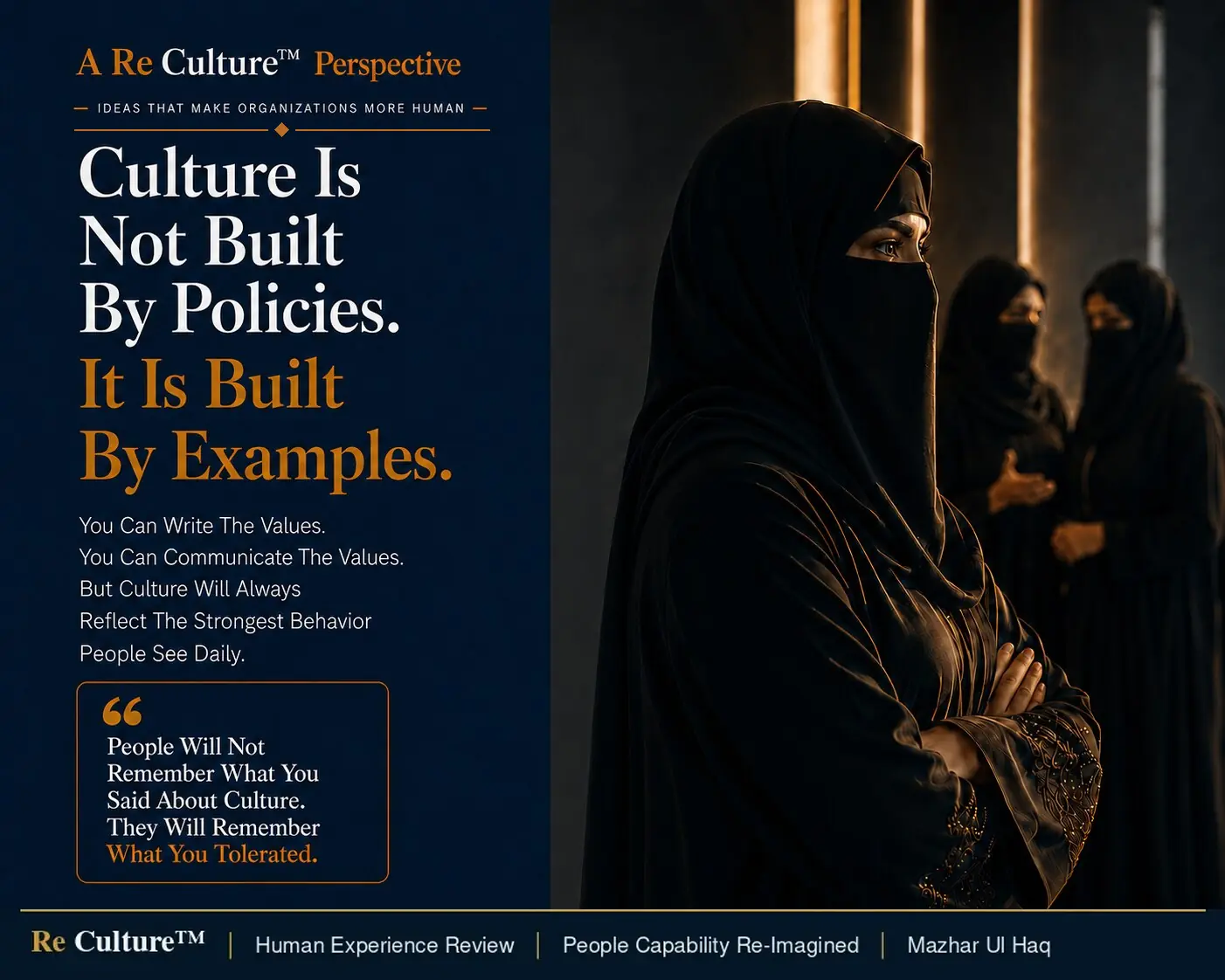
Every Organization Has Values. They Appear In Policy Documents, Leadership Presentations, Codes Of Conduct, And Carefully Written Statements About The Institution It Aspires To Become. These Commitments Matter. They Establish Expectations, Define Boundaries, And Give People A Shared Language Through Which Conduct Can Be Understood. Yet A Written Value Is Not The Same As A Lived Culture.
Culture Takes Form Through What People Repeatedly Observe. They Notice Which Behaviors Receive Recognition, Which Decisions Are Defended, Which Concerns Are Taken Seriously, And Which Actions Continue Without Consequence. Through These Daily Observations, People Learn What The Institution Truly Values—Not From What It Declares, But From What It Consistently Demonstrates.
Policies Can Define Respect, But Everyday Interactions Reveal Whether Respect Is Real. A Framework Can Describe Accountability, But Leadership Responses Reveal Whether Accountability Applies Equally. An Organization Can Speak About Trust, Inclusion, And Integrity, Yet Each Principle Loses Meaning When Contradictory Behavior Is Excused Because It Comes From Someone Considered Important, Influential, Or Difficult To Replace.
This Is Why Leadership Example Carries Greater Cultural Weight Than Leadership Language. People Do Not Experience Culture As An Abstract Statement. They Experience It Through Meetings, Decisions, Silences, Corrections, Opportunities, And The Manner In Which Authority Is Exercised. Every Visible Leadership Choice Becomes An Informal Instruction About How The Organization Really Works.
The Human Experience Of Culture Is Formed Within The Distance Between What Is Promised And What Is Practised. When That Distance Is Small, People Find Coherence. They Understand What The Institution Stands For And Can Place Confidence In Its Direction. When The Distance Widens, Uncertainty Enters The Human Experience. People Begin To Protect Themselves, Withhold Their Voice, And Interpret Official Values As Language Without Institutional Meaning.
This Does Not Make Policies Unimportant. It Makes Leadership Responsible For Giving Them Life. Policies Establish The Standard; Example Gives The Standard Credibility. Communication Introduces The Value; Consistent Conduct Allows People To Believe It. Accountability Protects The Culture By Ensuring That No Position, Performance Record, Or Personal Influence Places Someone Beyond The Principles Expected Of Everyone Else.
Culture Is Therefore Not Built In A Single Workshop Or Announced Through A Campaign. It Is Accumulated Through The Behaviors That Leadership Models, Rewards, Corrects, And Tolerates Over Time. Every Institution Eventually Becomes A Reflection Of The Strongest Conduct Its People Are Repeatedly Asked To Accept.
People May Not Remember Every Message Leadership Shared About Culture. They Will Remember The Moments In Which Leadership Chose Whether Its Values Would Remain Words—Or Become The Standard By Which The Institution Was Truly Led.
What Is The Strongest Behavior Your Institution Is Teaching People To Accept Through What Leadership Repeatedly Tolerates?