
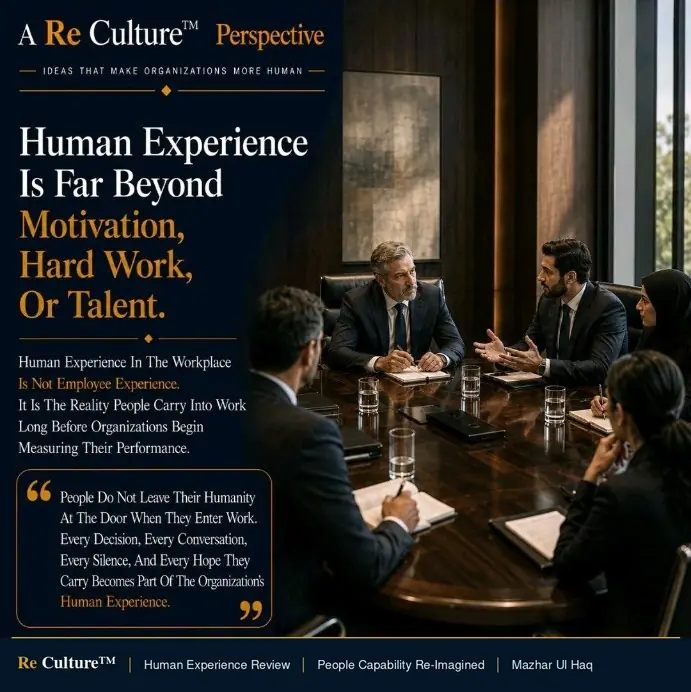
Organizations Often Speak About Employees As Though Their Contribution Begins The Moment They Walk Through The Workplace Door. We Describe Them As Motivated Or Unmotivated, Talented Or Average, High Performing Or Underperforming. Yet None Of These Words Explain The Human Being Standing Behind The Role.
Every Person Arrives At Work Carrying A Life That Was Already In Motion Before The Working Day Began. They Bring Responsibilities That No Job Description Can Capture, Experiences That No Performance Review Can Measure, And Aspirations That No Organizational Chart Can Fully Reveal. Leadership That Recognizes Only The Role Will Always See Less Than The Person.
Many Organizations Continue To Invest In Employee Experience. It Is A Valuable Endeavour. Yet Human Experience Exists Long Before Employment Begins And Continues Long After The Working Day Ends. It Can't Be Reduced To Engagement Scores, Recognition Programs, Or Workplace Perks. It Lives Within Every Conversation, Every Decision, Every Silence, And Every Moment In Which A Person Feels Seen Or Invisible.
Consider Two Organizations Facing The Same Challenge. Both Possess Capable People, Similar Resources, And Comparable Strategies. One Regards Individuals Primarily Through Their Roles And Responsibilities. The Other Understands That Every Role Is Fulfilled By A Human Being Whose Capacity To Contribute Is Influenced By Trust, Dignity, Belonging, And Meaning. The Difference Rarely Appears On A Dashboard, Yet Over Time It Shapes Commitment, Collaboration, Innovation, And The Character Of The Institution Itself.
Leadership Will Continue To Build Better Systems, Smarter Technologies, And More Efficient Processes. Those Advancements Matter. But None Of Them Will Replace The Responsibility To Understand The Human Reality That Exists Behind Every Position. The Institutions That Endure Will Not Simply Be Remembered For The Excellence Of Their Operations. They Will Be Remembered For The Humanity They Chose To Preserve While Pursuing Excellence.
The Most Important Question Every Leadership Team Should Carry Into The Boardroom Is Not Whether People Are Performing At Their Best. It Is Whether The Organization Has Created A Place Where People Never Need To Leave Their Humanity Behind In Order To Do Their Best Work.
The Future Of Leadership Will Not Be Defined By How Well Organizations Manage Employees. It Will Be Defined By How Deeply They Understand Human Experience.
Has The Organization Created A Place Where People Never Need To Leave Their Humanity Behind In Order To Do Their Best Work?