Editorial ThemePermission, Human Consequence, And The Responsibility That Authority Cannot Discharge By Procedure Alone.
Human Experience PerspectiveA Decision Is Lived By The Person Required To Carry Its Workload, Instability, Constraint, Or Loss Of Voice After The Meeting Ends.
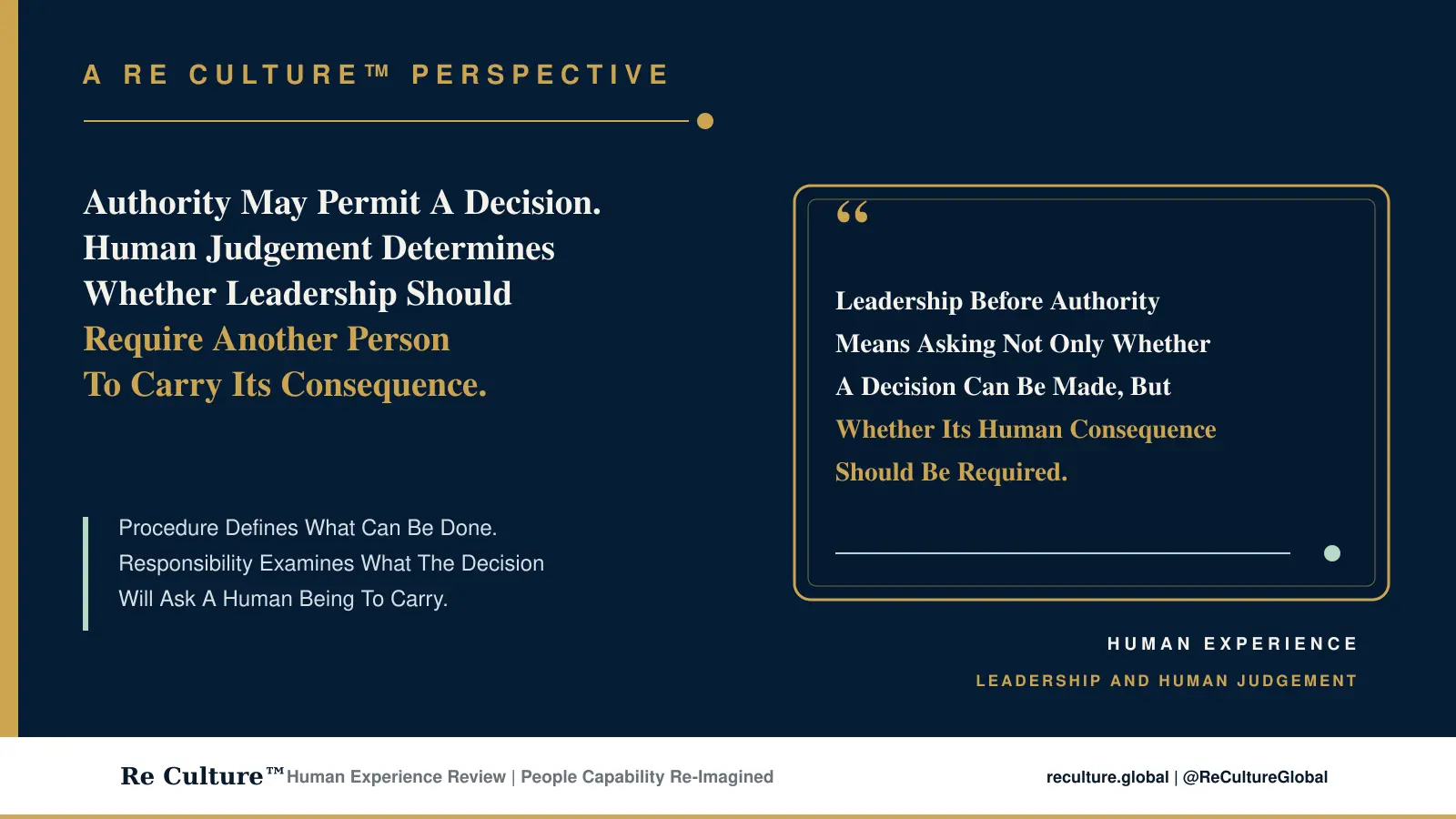
CompositionThe Approved Landscape Constitution Holds The Decision Proposition And Its Human Consequence In A Disciplined Text-Only Editorial Field.
Human EmotionThe Card Holds Dignity, Exposure, Uncertainty, And The Unequal Weight That Can Remain After Authority Has Moved On.
Leadership PerspectiveLeadership Must Ask Whether A Permitted Decision Is Necessary, Proportionate, And Responsible Toward The Person Who Will Carry It.
Organizational MeaningProcedural Correctness Cannot Substitute For Answerability When A Decision Transfers Consequence Without Voice, Support, Or Adequate Authority.
SymbolismThe Open Field Represents What Procedure Allows; The Framed Reflection Holds The Human Consequence Leadership Must Continue To See.
Lighting PhilosophyDeep Navy Carries The Weight Of Authority, Gold Marks The Point Of Judgement, And Light Green Signals Protected Human Dignity.
Constitutional ReflectionLeadership Before Authority Means Asking Not Only Whether A Decision Can Be Made, But Whether Its Human Consequence Should Be Required.