
The Human Experience Brief

Attunement

Vol. 1: Human Experience Foundations
Issue 2 | Attunement
The Leadership Capacity That Notices What Metrics Never Will
Published July 22, 2026 · Mazhar Ul Haq · Re Culture™
Attunement
Organizations Rarely Lose Their Future When They Miss Their Targets. They Lose It When They Lose Their Capacity To Notice Their People.

Organizations Have Never Had More Data. Yet Many Continue To Miss The Signals That Matter Most. Dashboards Can Measure Performance. They Cannot Measure The Quiet Moment When A Person Stops Believing Their Voice Matters. By The Time That Reality Appears In A Report, The Human Experience Has Already Changed.

Attunement Is The Leadership Capacity To Recognize What Numbers Cannot Explain. It Is The Ability To Notice Shifting Energy, Unspoken Concerns, Growing Silence, And The Subtle Changes That Reveal Whether Trust Is Strengthening Or Slowly Eroding. It Is Less About Observation And More About Human Awareness.

Many Organizations Respond To Human Challenges Only After They Become Operational Problems. They Wait For Attrition To Rise, Engagement To Fall, Or Performance To Decline. Yet The Earliest Warnings Are Almost Never Found In Data. They Are Found In Everyday Human Experiences That Leaders Either Notice Or Overlook.

Leadership Is Not Defined By The Amount Of Information It Receives. It Is Defined By The Quality Of Attention It Gives. An Attuned Leader Listens Beyond Words, Sees Beyond Metrics, And Understands That Sustainable Performance Begins Long Before It Appears On A Dashboard.

At Re Culture™, We Believe That Attunement Is Not A Soft Skill. It Is A Foundational Leadership Capability That Preserves Trust, Strengthens Belonging, And Enables Organizations To Respond To Human Reality Before Human Reality Becomes Organizational Consequence.

Reflective Question
What Human Signal Might Your Organization Be Missing Simply Because No One Has Learned To Notice It?

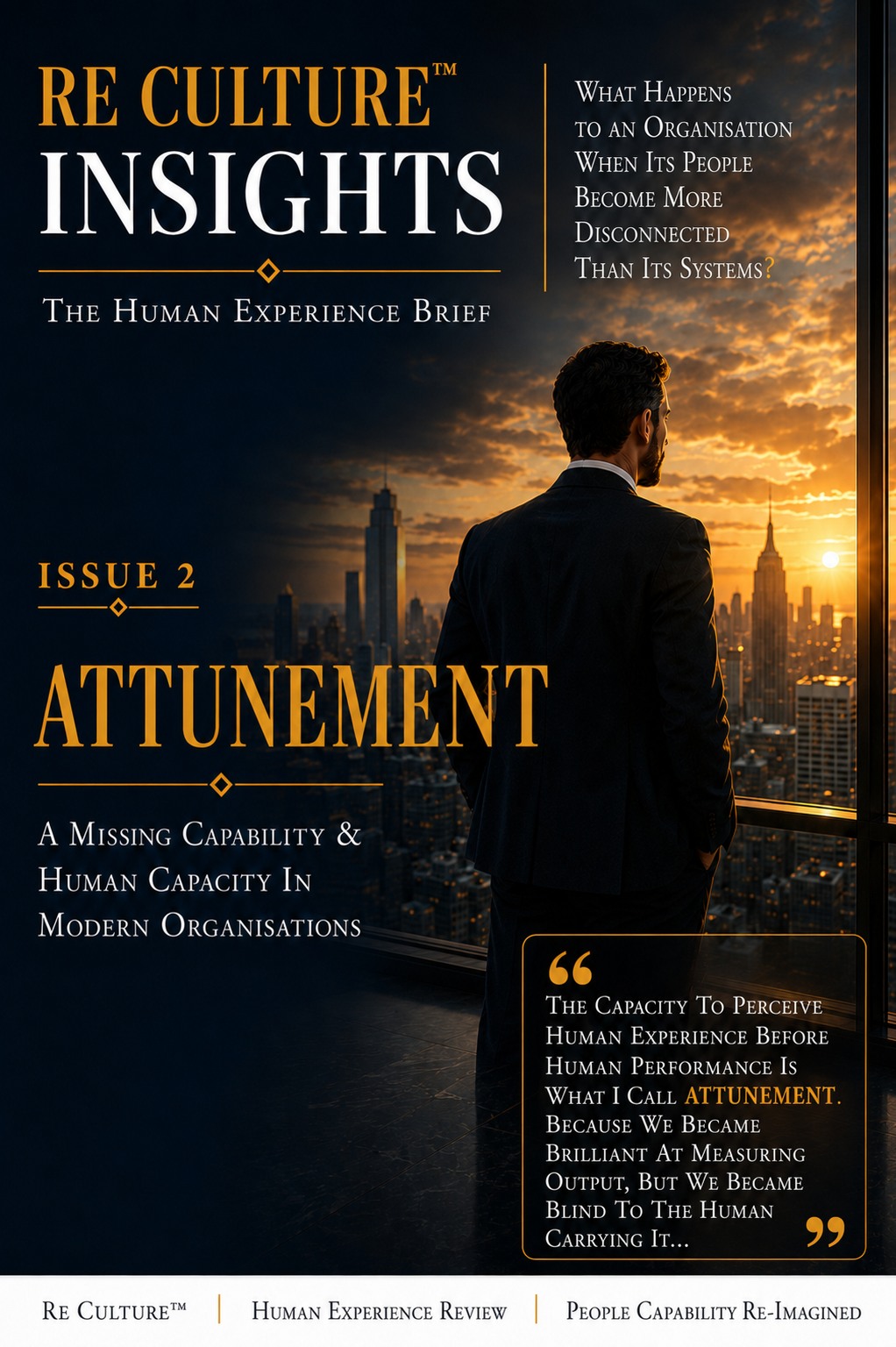
Visual Details And Institutional Interpretation

Editorial Theme

Attunement As The Leadership Capacity To Notice Human Reality Before It Becomes Organizational Consequence.

Human Experience Perspective

The Solitary Leader Faces A Vast Organizational Landscape, Suggesting That Visibility Of Systems Does Not Guarantee Awareness Of People.

Composition

The Human Figure Stands Between The Dark Institutional Interior And The Illuminated Horizon, Holding Attention At The Boundary Between What Is Known And What Is Emerging.

Human Emotion

Stillness, Distance, And Reflection Express The Quiet Responsibility Of Noticing What Has Not Yet Been Said Or Measured.

Leadership Perspective

Leadership Is Presented As The Quality Of Attention Given To Shifting Energy, Growing Silence, Trust, Belonging, And Human Signals.

Organizational Meaning

Dashboards Can Describe Results, Yet The Earliest Evidence Of Human Change Often Appears In Everyday Experience Before It Appears In Data.

Symbolism

The Window Represents Visibility Without Proximity. The City Represents Organizational Complexity. The Horizon Represents Consequence Approaching Before It Is Fully Understood.

Lighting Philosophy

Warm Gold Light Meets Deep Navy Shadow, Reflecting The Difference Between What Leadership Can See And What It Must Learn To Notice.

Constitutional Reflection

An Organization Protects Its Future When Its Leaders Preserve The Human Capacity To Notice People Before Metrics Reveal Their Absence.

Institutional Directory