
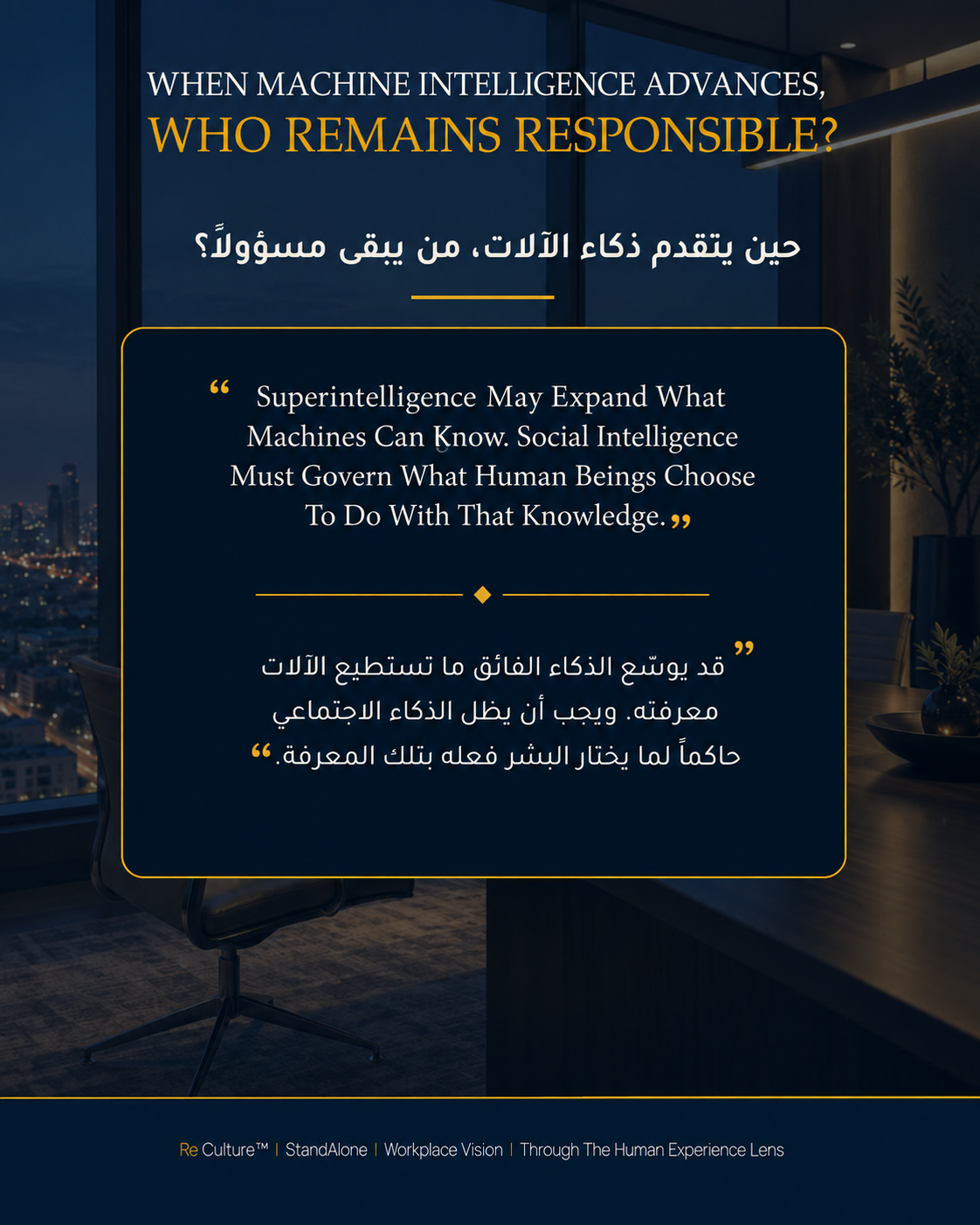
Machine Intelligence Is Often Described Through Scale, Speed, Prediction, Memory And Analytical Reach. Super-Intelligence Extends This Possibility Further, Imagining Systems Capable Of Knowing, Connecting And Calculating Beyond Ordinary Human Capacity. Yet Expanding What A Machine Can Know Doesn't Determine What An Institution Should Do With That Knowledge, Whose Life May Be Altered By Its Use, Or Who Must Remain Accountable When Its Consequences Become Human.
Social-Intelligence Is Not A Slower Form Of Computation. It Is The Human Capacity To Recognize Context, Relationship, Dignity, Trust, Power, Emotion And Cultural Meaning. These Are Not Decorative Qualities Placed Around A Technical Decision. They Form Part Of The Judgement Through Which Intelligence Becomes Responsible.
The Deeper Risk Is Not Only That Machines May Become More Capable. It Is That Human Beings May Become Less Willing To Listen, Interpret And Remain Answerable Because A System Appears Certain. As Technological Capability Expands, The Human Obligation To Question Its Use, Examine Its Consequences And Protect The Person Affected Must Expand With It.